Safe Online Pokies in Australia: What the Rules Mean
 Available in US
Understand how legality, game fairness, payments and responsible limits shape safer pokies choices in Australia.

Table of Contents
- What “Safe” Means When Real-Money Online Pokies Are Banned
- Australian Pokies Belong to a State-by-State Gambling System
- RTP, Volatility and the Mechanics Behind a Pokie Result
- Free Spins Can Explain a Game Without Turning It Into a Bet
- Why PayID Does Not Make Online Pokies Legal
- The Online Pokies Casino Question Has a Legal Answer
- What the Safest Australian Pokies Setting Looks Like in Practice
- Choosing Among Legal Australian Pokies Without a “Best” Pretence
- Payments, Promotions and the Limits of Safe Online Play
- Safe AU Pokies Means Knowing Where the Rules Actually Apply
What “Safe” Means When Real-Money Online Pokies Are Banned
For Australian readers in 2026, the word “safe” has two different meanings when it is attached to online pokies. One concerns the game itself: whether the result is produced by a fair random process, whether the published mathematics is meaningful, and whether play can be kept within sensible limits. The other concerns the service offering the game: whether it is lawful to provide real-money online casino pokies to people in Australia.
Those questions are related, but they are not interchangeable. A game may have an independently audited Random Number Generator (RNG) and still be offered through a service that Australian law does not permit. A polished website may display security badges and familiar payment branding while offering no Australian casino licence, because no such domestic licence exists for real-money online casino games.
The legal boundary comes first. Under the Interactive Gambling Act 2001, online casinos offering real-money pokies to Australians are banned. The prohibition applies to the provider offering the service, not to the individual player. That distinction matters: an Australian does not commit a crime merely by placing a bet at an offshore site, but the site is not thereby transformed into a lawful Australian gambling service.
This list highlights operators that may be relevant when exploring safe online pokies in Australia in 2026. Use the available licensing, bonus, deposit, and payout details as practical points to review before choosing a casino.
License: Curacao eGaming Licence · Min. deposit: A$20 Skycrown Casino operates under a Curacao eGaming Licence. Its minimum deposit is A$20.
License: Curacao eGaming Licence · Min. deposit: A$10 PlayWest holds a Curacao eGaming Licence and accepts deposits from A$10.
Bonus: up to A$750 + 50 jackpot spins, 35x wagering · Payout speed: crypto ~90 minutes, fiat 1-5 days · Min. deposit: A$30 Kingmaker offers up to A$750 plus 50 jackpot spins with 35x wagering. Crypto payouts are listed at around 90 minutes, while fiat payouts take 1–5 days; the minimum deposit is A$30.
License: Curacao (operating since 2017) · Bonus: 250% up to A$2,000 + 50 free spins on the first of six deposits · Min. deposit: A$20 Uptown Pokies has operated under Curacao since 2017. Its offer includes a 250% bonus up to A$2,000 plus 50 free spins on the first of six deposits, with a A$20 minimum deposit.
License: Curacao · Bonus: up to A$10,000 multi-stage + 500 free spins · Min. deposit: A$20 (POLi) Lucky Dreams is licensed in Curacao and promotes a multi-stage bonus of up to A$10,000 with 500 free spins. The minimum deposit is A$20 when using POLi.
License: Curacao eGaming (Roby Games Ltd) · Bonus: 100% up to A$750 + 200 free spins Roby Casino operates under a Curacao eGaming licence held by Roby Games Ltd. Its listed promotion is a 100% bonus up to A$750 plus 200 free spins.
License: Curacao · Bonus: 100% up to A$500 + 200 free spins, 10x wagering · Payout speed: crypto 30-60 minutes, fiat 1-5 days · Min. deposit: A$10 Wild Tokyo operates under a Curacao licence and offers a 100% bonus up to A$500 plus 200 free spins with 10x wagering. The minimum deposit is A$10, with crypto payouts listed at 30–60 minutes and fiat payouts at 1–5 days.
License: Curacao eGaming OGL/2024/923/0383 (Antillephone N.V.) · Bonus: up to A$2,000 + 100 free spins across 2 deposits · Min. deposit: A$30 WinSpirit Casino holds Curacao eGaming OGL/2024/923/0383, issued by Antillephone N.V. Its promotion offers up to A$2,000 plus 100 free spins across two deposits, with a A$30 minimum deposit.
License: Curacao · Bonus: up to A$2,000 Golden Pokies operates under a Curacao licence and lists a bonus of up to A$2,000.
Bonus: up to A$7,500 + 550 free spins across 10 deposits, 50x wagering · Payout speed: crypto under 1 hour, PayID 1-3 business days · Min. deposit: A$20 (A$30 to qualify for the bonus) Ricky Casino offers up to A$7,500 plus 550 free spins across 10 deposits, with 50x wagering. Crypto payouts are listed at under one hour and PayID payouts at 1–3 business days; the minimum deposit is A$20, or A$30 to qualify for the bonus.
So “safe online pokies Australia 2026” cannot honestly mean a list of approved online casinos. There are no domestically licensed real-money online casinos for Australian players. It can mean something more precise: understanding how a pokie result is generated, recognising what safety claims can and cannot establish, and separating legal gambling options from prohibited online casino services.
Fairness is not the same as legality
The mechanics of a pokie are relatively straightforward in principle. Each spin is independent. The previous result has no bearing on the next outcome, and the machine does not become “due” after a sequence of losses. The RNG operates independently of time, player traffic and other external factors. A busy site does not make a win more likely; a quiet hour does not make it less likely.
RTP, or Return to Player, is also frequently misunderstood. It is a long-run statistical figure, not a promise about one sitting. Short sessions can finish substantially above or below the published RTP. A result that looks unusually generous does not prove that the next spin will be poor, and a run of losses does not create a mathematical debt that the game must repay.
Where an online platform is licensed to face Australian customers in a lawful category, its RNG is required to be independently audited. That is a useful standard for evaluating game fairness. It is not an Australian authorisation for online casino pokies. An audit can examine whether the random process behaves as represented; it cannot grant a licence that Australian law does not provide.
This is the small but decisive distinction often lost beneath the language of “trusted” and “secure”. Technical fairness belongs to the game. Legal permission belongs to the operator and the product. One cannot substitute for the other.
What responsible play can and cannot fix
Responsible gambling is another part of safety, but it is not a legal workaround. A player may understand independence, RTP and random outcomes perfectly and still be using a prohibited online casino service. Conversely, a lawful gambling environment may still involve financial and emotional risk. Safety is therefore not a decorative label attached to a website. It is a combination of transparent mechanics, enforceable controls and a lawful setting.
Australia’s legal gambling landscape is deliberately uneven rather than uniform. Land-based casinos, licensed bookmakers and lotteries are legal options for Australians to engage in gambling. Online sports betting is a licensed category, while online casino games such as pokies remain prohibited. The difference is not explained by whether a website loads, whether a bank transfer succeeds or whether the game resembles one found in a club or hotel.
ACMA enforces the restrictions. Its measures include blocking shady sites and warning influencers about dodgy promotions, according to a specialist industry review. That enforcement role gives the word “safe” a practical edge: a service can disappear, be blocked or attract regulatory action even if its interface looks professional. A familiar logo is not a legal framework.
Legal Warning Online casinos offering real-money pokies to Australians are banned under the Interactive Gambling Act 2001.
The sensible question is therefore not simply, “Are online pokies safe?” It is more exact: safe in which sense? Safe from manipulated outcomes is a question about the RNG and independent auditing. Safe from misunderstanding the mathematics is a question about RTP and probability. Safe as an Australian gambling service is a question of legality, and real-money online casino pokies fail that test.
Dry distinction. Important distinction.
For Australian readers, the responsible conclusion is restrained. Game fairness can be examined as a technical matter, and responsible play can be treated as a personal and social safeguard. Neither should be presented as proof that an online casino may lawfully offer real-money pokies in Australia. The safer understanding begins by keeping those categories apart.
Australian Pokies Belong to a State-by-State Gambling System
The phrase “Australian pokies” describes a local gambling system, not a generic online casino category. In Australia, pokie machines are principally found in clubs, hotels and casinos operating under state or territory rules. The setting matters because the venue, jurisdiction and machine conditions are part of the legal arrangement. A website displaying Australian symbols is not thereby part of that arrangement.
Australia has no single gambling statute or national gambling authority governing every form of play. Responsibility is divided between the federal level and the states and territories. That division explains why a pokie in a club in New South Wales may operate under different conditions from one in a hotel in the Northern Territory or a casino in another jurisdiction. The country has one map, but several gambling rulebooks.
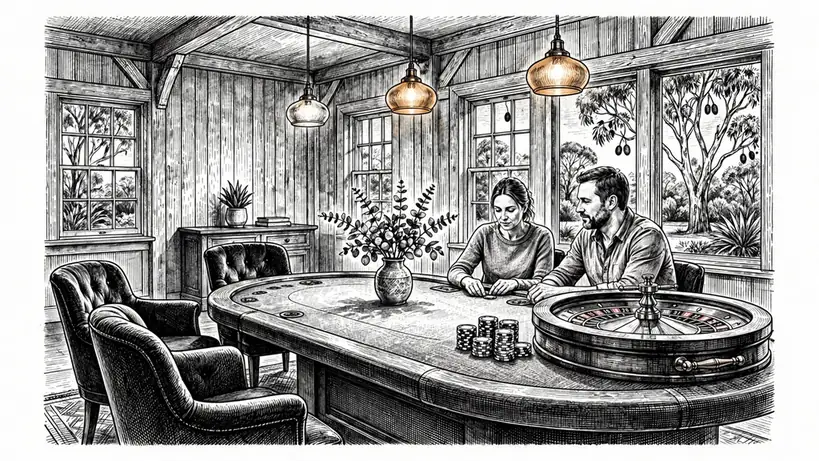
New South Wales: a large club and hotel network
New South Wales has a particularly extensive machine system. A state-by-state gambling overview records 100,500 gaming machines: 99,000 in clubs and hotels, and 1,500 at Star Casino in Sydney. The figures show why “Australian pokies” cannot sensibly be treated as shorthand for casino websites. In New South Wales, the ordinary local experience is heavily connected with community clubs and hotels rather than with a remote platform.
For machines in New South Wales clubs and hotels, the maximum bet is $10 per spin. The same source records win limits of $10,000 or $500,000 inter-venue. Those limits belong to the regulated venue framework; they are not characteristics that an offshore website can borrow by using Australian language or displaying Australian currency.
This club-based structure also carries a social history. Clubs are not simply miniature casinos hidden behind a different sign. They are part of the state’s established hospitality and community-gambling landscape, with regulation attached to the premises and the machines. The architecture is physical before it is digital. A surprisingly old-fashioned idea, which may be why it remains useful.
The Australian Capital Territory
The Australian Capital Territory provides a sharper example of how local rules shape the meaning of safe Australian pokies. A specialist gambling review records 5,200 gaming machines in clubs and hotels, with no gaming machines at Casino Canberra. That detail alone makes the territory distinct: the city has a casino by name, but the machines are located elsewhere.
The same review states that the ACT enforces a five-hour gambling break and a maximum bet of $10 per spin. It also reports a minimum RTP of 87% for gaming machines. These are jurisdiction-specific conditions, not universal promises about every pokie carrying an Australian theme.
NSW Max Bet $10 per spin
ACT Min RTP 87%
NT Min RTP 85% (Clubs/Hotels) / 88% (Casinos)
RTP is a mathematical feature of a machine over the long run, while the location and operating rules come from the jurisdiction. Keeping those ideas separate prevents a common confusion: a game’s design does not create a licence, and a venue’s licence does not turn an illegal website into a local one.
Northern Territory: different rules for different venues
The Northern Territory has 2,195 gaming machines in clubs, hotels and two casinos, identified in a specialist gambling review as Sky City and Lasseters. Here, the venue distinction is especially visible in the reported limits.
Clubs and hotels have a maximum bet of $5 per spin and a minimum RTP of 85%. Casinos have no maximum bet and a minimum RTP of 88%. The contrast is not a minor technical footnote. It demonstrates that “safe” cannot mean one universal Australian setting. The same broad category of machine is governed differently depending on whether it sits in a club, hotel or casino.
That difference also explains why an online page promising the “best Australian pokies” is making a dubious simplification if it ignores location. A physical venue is subject to the rules attached to its licence and jurisdiction. An offshore site may mention familiar venues, providers or game names, but those references do not transfer the local controls.
What the state system changes
Across these examples, the important dividing line is not whether a machine looks Australian. It is where the gambling product is supplied and which authority governs that supply. Clubs, hotels and casinos are treated as regulated venues within a state or territory system. Their machines sit inside rules concerning betting limits, RTP settings, venue type and, in some places, breaks or other operating conditions.
That makes “safe online Australian pokies” an unstable phrase. The Australian part can refer to local players, local themes or local vocabulary, but it does not establish a lawful online pokie market. The safer and more accurate interpretation is that Australians can examine how legal, land-based pokies are organised, while recognising that the online casino model is a separate legal question.
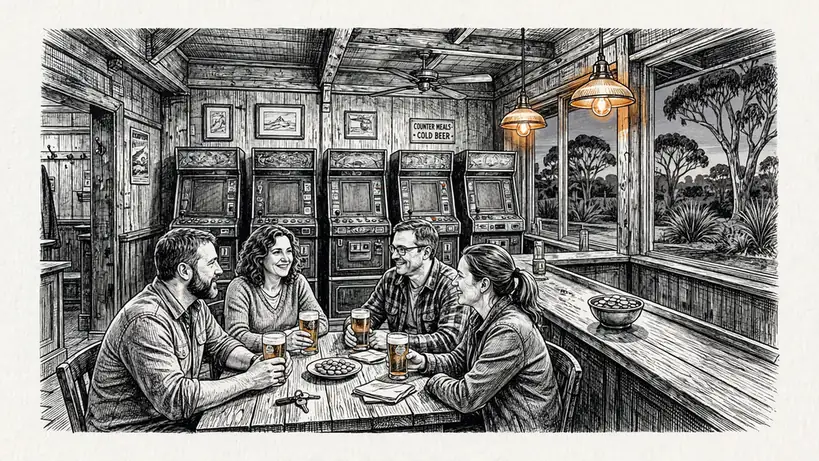
A foreign website cannot acquire an Australian casino licence merely by offering Australian payment branding, calling itself local or listing familiar pokie titles. Nor does a foreign licence place it inside the state and territory system described here. The legal protection comes from the actual regulatory framework, not from decorative national identity.
So the useful comparison is between Australian jurisdictions and venues, not between offshore websites claiming to serve Australia. New South Wales shows the scale of the club and hotel network. The ACT shows how a territory can impose distinct breaks and machine settings. The Northern Territory shows how the same jurisdiction can differentiate clubs, hotels and casinos.
Different premises. Different rules. One country.
RTP, Volatility and the Mechanics Behind a Pokie Result
A pokie result begins with a random number generator (RNG), not with the previous spin, the time of day or the number of people playing. Each spin is independent. A win does not make another win more likely, and a losing run does not create a debt that the machine must repay. Machines are admirably free of narrative justice.
For a machine presented through a licensed Australian-facing platform, the RNG is required to be independently audited. That audit concerns the operation of the random system, not the promise of a favourable session. It can support confidence that outcomes are generated independently, while saying nothing about whether the next spin will win.
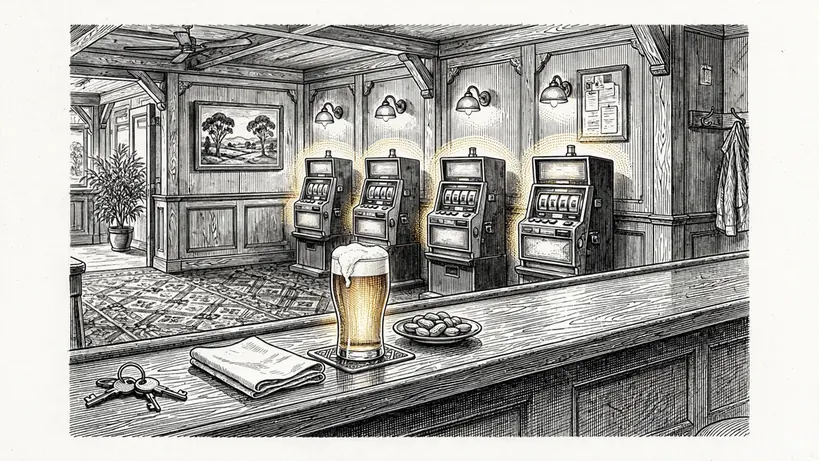
What RTP actually describes
RTP means Return to Player. It is a long-run statistical figure showing the proportion a pokie is designed to return across a very large number of spins. It is not a forecast for one visit, one deposit or one evening.
A short session can finish substantially above or below the published RTP. A result well below that figure does not mean the machine is malfunctioning; a result above it does not mean the game has become generous. The percentage describes a distribution over time, not a personal settlement at the end of a session.
That distinction matters when judging claims about safe and secure online pokies. Security can relate to the integrity of the RNG and the handling of game data. It cannot turn RTP into a guarantee. Nor can a payment method establish that a game is lawful or fair; those are separate questions.
The same principle applies to a search for whether PayID is safe for pokie payments. A bank transfer system may have its own security controls, but it does not alter the mathematics of a game. Payment security and game fairness sit in different rooms.
Volatility changes the shape of play
Volatility, sometimes called variance, describes how returns are distributed rather than how much a game promises to return in the long run.
- High-variance pokies pay less frequently, with larger amounts when a significant hit occurs.
- Low-variance pokies pay more frequently, with smaller returns spread across a session.
Neither profile removes risk. High variance can produce long stretches without a substantial return, followed by a larger hit. Low variance can feel steadier because smaller returns appear more often, while still ending below the game’s RTP over a short session. Frequency is not profitability.
Two named games illustrate the distinction, but the descriptions should not be inflated into universal market rules. A profiled game review describes Buffalo Power by Playson as a high-variance pokie, with infrequent but larger hit patterns. The same type of source describes Dolphin Treasure by Aristocrat as lower variance, with steadier smaller returns across a session. Those are source-specific descriptions of the games, not guarantees about what any individual session will produce.
Reading the machine without reading too much into it
The useful questions are mechanical. Is the RNG independently audited? What RTP is published for the game? How is its volatility described? Are the rules and paytable available before play? These details explain the structure of possible outcomes.
They do not reveal the next result. No clock, traffic level or previous sequence can provide that information, because the RNG operates independently of time, player traffic and other external factors. A crowded platform does not make a win overdue. A quiet one does not make it more likely.
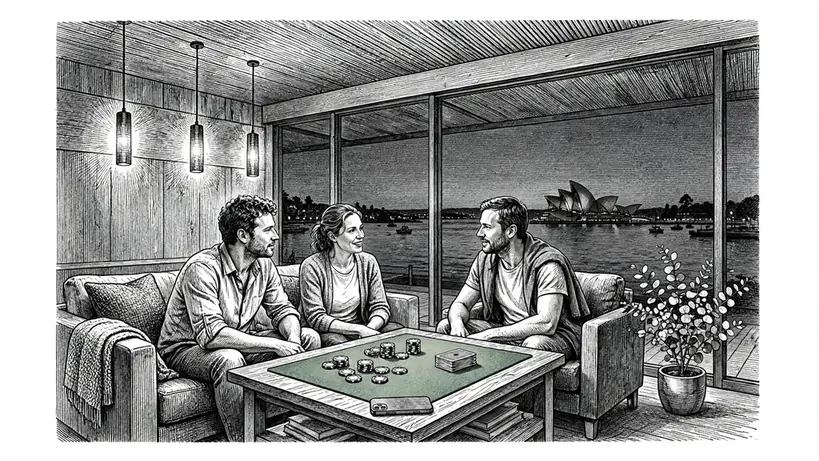
The mathematics is impersonal. That is precisely why it deserves more trust than superstition.
Free Spins Can Explain a Game Without Turning It Into a Bet
Demo play has one legitimate use: it shows how a pokie behaves before money enters the picture. Reels move, symbols land, features appear, and the screen records a result. None of that makes a prohibited online casino lawful, and none of it turns entertainment software into a licensed gambling service. It is simply a way to observe a game.
That distinction matters in Australia. A free mode can resemble the paid version closely enough to create the impression that the two are interchangeable. They are not. Playing without stakes removes the financial consequence of a spin; it does not create permission for an online operator to offer real-money pokies to Australian customers. The legal boundary remains where it was.
What demo spins can show
A practice session can make the structure of a pokie less mysterious. It may reveal:
- how the reels and paylines are presented;
- which symbols form combinations;
- how bonus features are introduced;
- how quickly the game moves from one result to the next;
- whether the visual design is clear or needlessly noisy.
This is useful knowledge, but it is not a prediction tool. A demo result says nothing about what a later paid spin would produce. Each spin is independent, and the previous result has no bearing on the next outcome. A run of wins in free play is not a sign that real-money play is approaching a favourable turn. The machine has no memory, despite the theatrical confidence of many interfaces.
Demo play can also help separate attraction from understanding. A bright theme, familiar character or dramatic sound may make a game memorable without making its mechanics suitable for a particular session. Watching the feature sequence without wagering allows the design to be judged on its own terms. Entertainment is still entertainment when the wallet stays out of the room.
The same caution applies to claims about returns. RTP is a long-run statistical figure, not a promise attached to a short demonstration. Free spins cannot establish what a paid session will return, nor can they reveal a coming result. They can only familiarise a player with the machine’s visible operation.
For anyone looking for safe, free fun with pokies, that is the sensible boundary: use practice mode to learn the layout and rhythm, then stop there if the alternative would be an unlawful online casino. A demonstration explains a game. It does not authorise a bet.
Why PayID Does Not Make Online Pokies Legal
PayID is a payment method, not a gambling licence. Its name can make a transaction feel distinctly Australian: familiar banking infrastructure, a local-looking transfer, and no mysterious card form in sight. None of that changes the legal status of the service receiving the money.
Under the Interactive Gambling Act 2001, online casinos offering real-money pokies to Australians are banned. The prohibition concerns the gambling service itself. It does not disappear because a deposit is made through PayID, a bank transfer, or another payment channel. A secure payment rail can help identify where money is sent; it cannot authorise a prohibited interactive gambling service.
That distinction matters because “safe PayID pokies Australia” can sound like a practical category, when it is really two separate questions pressed together. Is the payment system genuine and protected by the banking environment? Is the gambling product lawful for Australian customers? The first question cannot answer the second.
Legal Reality Using PayID for transactions does not make an offshore online casino lawful in Australia.
PayID is part of the New Payments Platform and is used for rapid bank payments. Its presence may therefore be used in advertising to suggest local legitimacy. But an Australian payment method does not turn an offshore casino into an Australian-licensed casino. No domestic licence exists for real-money online casino games offered to Australian players. A familiar transfer button is not a regulatory passport.
The same caution applies to claims that a site is “bank-friendly”, “Australia-ready” or “secure because it accepts PayID”. Those descriptions may refer only to the route used to move funds. They say nothing about whether the underlying pokies service may legally be provided. The legal question remains stubbornly separate.
A profile-style gambling review reports that ACMA enforces these restrictions by blocking shady sites and warning influencers against dodgy promotions. That enforcement approach also explains why payment branding should not be treated as proof of approval. A service may be reachable today and still be subject to intervention; visibility is not legality.
PayID also does not create the protections attached to regulated local gambling products. It does not supply a licence, independent oversight, or an entitlement to recover money from an unlawful operator. Nor does it place an offshore casino inside Australian self-exclusion arrangements. Payment convenience is not player protection.
The sensible reading of payment language is therefore narrow: PayID describes how a transfer may be made, not whether the bet may lawfully be accepted. For Australian pokies, that difference is the whole story. A familiar payment method cannot make a prohibited service legal.

The Online Pokies Casino Question Has a Legal Answer
For Australian residents, the legal position on an online pokies casino is unusually direct. Under the Interactive Gambling Act 2001, online casinos that offer real-money pokies to Australians are banned. The rule is not softened by attractive design, familiar game titles, fast banking, or a foreign licence. An offshore operator may hold a licence in another jurisdiction, but that licence does not authorise the operator to provide casino games to Australian customers.
That distinction matters because the word “safe” can quietly change meaning. In one context, it may describe secure software or independently tested game results. In another, it may imply that the service itself is lawful to use. Those are separate questions. A website can present polished security language while offering a product that Australian law treats as a prohibited interactive gambling service. A tidy interface is not a legal category.
The law targets providers rather than making the individual player a criminal for placing a bet at an offshore site. That does not turn such a service into a lawful Australian casino, nor does it create a domestic licence that the operator can display. No Australian gambling licence exists for casino games because offering that product to Australians is against the law.
What remains legal
The legal gambling market is narrower than the advertising language surrounding it suggests. Australian residents can still engage with:
- Land-based casinos, where gambling takes place under the relevant state or territory framework;
- Licensed bookmakers, including legal online sports and race wagering;
- Lotteries, provided through licensed arrangements.
This is not a technical footnote. It is the dividing line between locally authorised gambling products and online casino claims dressed up as convenience. Sports betting and race wagering can be licensed at state and territory level; online casino games such as pokies, roulette, blackjack and live dealer tables remain prohibited when offered to an Australian customer.
The Australian Communications and Media Authority, or ACMA, enforces the federal restrictions. A specialist regulatory overview describes its work as including action against dubious sites and warnings to influencers involved in questionable promotions. ACMA can also seek the blocking of illegal offshore gambling websites. The practical message is less dramatic than a casino advertisement and more useful: availability on the internet does not establish legality.
So the legal answer is not a ranking of the safest online casinos. It is a boundary. Real-money online pokies are not a permitted Australian casino product; lawful alternatives are land-based gambling, licensed wagering and lotteries. Everything else needs to be judged against that fact first.
What the Safest Australian Pokies Setting Looks Like in Practice
Safety in Australian pokies is not a mood created by bright screens and cheerful music. It is built into the permitted setting: the venue, the machine, and the rules governing how quickly and how much a game can be played. The most reassuring feature is therefore not a claim that one machine is “best”, but the presence of enforceable limits around it.
Queensland offers a useful example. A specialist gambling-market overview records 47,811 listed gaming machines in the state: 44,015 in clubs and hotels and 3,796 in casinos. The same overview notes that casino machine numbers have no cap. That contrast matters. A large legal gambling system still contains different regulatory environments, rather than one uniform Australian standard.
For machines in Queensland clubs and hotels, the maximum bet is $5 per spin. The minimum RTP is set within a range of 85%–92%, and a machine may have no more than 50 lines. RTP remains a long-run statistical measure, not a promise attached to the next spin. Its practical value here is regulatory: a stated floor gives the machine a defined operating boundary, even though individual results can wander far above or below it.
Speed is another part of safety that is easy to overlook. Queensland requires at least three seconds between the start and finish of a game. That rule does not make a pokie profitable; nothing in the mathematics permits such a promise. It does, however, place a brake on the mechanical rhythm of repeated play. The pause is small. The principle is not.
These controls also change what “safe best pokies in Australia” can sensibly mean. The phrase cannot identify a universally superior machine, because safety belongs partly to the regulated environment around the game. A machine with attractive graphics may still be subject to a bet ceiling, an RTP requirement and a minimum game interval. The venue’s rules are doing the unglamorous work.
There is a social point here. Gambling regulation often becomes visible only when it interrupts convenience: a slower spin, a capped stake, a restricted setting. Yet those interruptions are precisely what distinguish a legal land-based pokie from an offshore promise built around frictionless access. In Queensland, the limits are not marketing decoration. They are the guardrails.
Not thrilling. Deliberate.
Choosing Among Legal Australian Pokies Without a “Best” Pretence
There is no single “best” Australian pokie setting. The machine is only part of the experience; the jurisdiction decides how quickly it can run, how much can be staked, and what the legal minimum RTP must be. A regulated venue therefore offers a local version of choice, not the boundless menu suggested by offshore casino advertising.
Australian Gambling Summary
- Real-money online casino pokies are prohibited under the Interactive Gambling Act 2001.
- Land-based gambling is regulated by specific state and territory rules.
- Payment methods like PayID do not grant legal status to offshore operators.
The figures below come from a specialist gambling overview, so they describe the stated jurisdictional settings rather than a universal market rule.
South Australia: slower play with physical limits
South Australia has 13,113 gaming machines: 12,118 in clubs and hotels and 995 in Adelaide Casino. That distribution matters. The same broad category of pokie exists in different venues, but the surrounding rules remain part of the product.
South Australian machines accept coins only because note acceptors are banned. The arrangement makes the transaction conspicuously physical: money has to pass through a machine in a form that cannot be mistaken for an invisible online balance. It is hardly glamorous. Regulation rarely is.
The minimum spin rate is 3.5 seconds, the maximum bet is $10 per spin, and the minimum RTP is 87.5%. These settings do not make a machine profitable or predictable. They define the permitted environment. A longer interval between spins changes the pace of a session; it does not change the independent nature of each result.
Tasmania: a narrower, slower framework
Tasmania has 3,680 gaming machines in hotels, clubs, and two casinos: Wrest Point and Country Club. Its machines have a minimum spin rate of three seconds, a $5 maximum bet per spin, and a maximum of 30 lines.
That combination gives Tasmania a different shape from South Australia. The permitted stake is lower, and the number of lines is capped. The result is not a claim that Tasmanian pokies are “better”; it is evidence that the meaning of choice depends on the rules surrounding the machine. A player comparing venues is comparing regulated formats as much as themes or features.
Victoria: venue type changes the comparison
Victoria has 30,000 gaming machines, including 27,500 in clubs and hotels and 2,500 in Crown Melbourne. In clubs and hotels, the maximum bet is $5 and the minimum RTP is 87%; casinos have no maximum bet.
That difference makes a simple ranking impossible. Someone seeking a lower permitted stake encounters one setting in clubs and hotels, while a casino operates under a different limit. Neither setting can honestly be labelled the safest online pokies option: real-money online casino pokies remain prohibited for Australians. The meaningful comparison is between legal venues and their controls.
“Best” is a poor substitute for context. The rules are the context.
Payments, Promotions and the Limits of Safe Online Play
A payment method can be secure while the service receiving the payment is unlawful. Those are separate questions, despite the way gambling advertising likes to place them side by side. A familiar bank interface, a polished checkout page or a fast transfer does not create an Australian casino licence. It only moves money.
Under the Interactive Gambling Act 2001, online casinos offering real-money pokies to Australians are banned. That prohibition concerns the gambling service itself. It is not cancelled by the technology used to fund an account, and it does not become softer because the website uses Australian branding or displays a foreign licence.
PayID illustrates the distinction neatly. PayID is a payment method, not a gambling regulator. The New Payments Platform can support a payment transaction, but it cannot authorise an online pokie service. Security at the payment layer says little about whether the underlying operator may lawfully offer casino games to Australian customers.
The same applies to promotions. A welcome bonus, free spins, a deposit match or a refer-a-friend offer may make an unlawful service look established and generous. It remains an inducement attached to a prohibited product. “Safe” is doing suspiciously heavy work in that sentence.
Promotional language also creates a compliance issue beyond the operator itself. A profile-style gambling review describes ACMA as enforcing restrictions by blocking shady sites and warning influencers against dodgy promotions. The practical point is broader than a warning about misleading copy: advertising or facilitating a prohibited online casino can help that service reach Australian customers. Publishing links or promotional material is therefore not a neutral editorial act.
This is why payment badges, bonus pages and claims about “trusted” offshore play should not be treated as evidence of local legality. A Malta or Curaçao licence may regulate an operator in another jurisdiction, but it does not authorise the provision of online pokies to Australians. Nor does a foreign licence turn an offshore casino into an Australian-licensed service; no domestically licensed real-money online casino exists for Australian players.
The lawful distinction is less glamorous but much clearer. Licensed Australian gambling products include sports and race wagering, while online casino games remain prohibited. Payment security matters within a lawful transaction. It cannot repair an unlawful one.
A safe payment is not a safe casino.
Safe AU Pokies Means Knowing Where the Rules Actually Apply
The phrase “safe AU pokies” only makes sense once the location of the gambling is separated from the appearance of the game. A pokie in an Australian club, hotel or casino sits inside a state or territory gambling system. Its venue, machine settings and player protections are subject to local controls. An online page can imitate the same reels, sounds and symbols while sitting outside that system entirely.
That distinction is the final checkpoint. Familiar graphics prove nothing.
Land-based gambling is not governed by one national casino authority. Australia divides responsibility between the Commonwealth and the states and territories, so the legal setting depends on the product and the place where it is offered. Physical casinos and gaming machines operate under local arrangements. Licensed bookmakers may offer wagering products, and lotteries remain legal forms of gambling. These categories should not be quietly blended into online casino claims.
One territory illustrates the point neatly. A specialist industry overview reports that the Australian Capital Territory has 5,200 gaming machines in clubs and hotels, while Casino Canberra has no gaming machines. That is not a footnote about website choice. It is evidence of how Australian pokie access is organised: through venues and rules attached to a jurisdiction, not through a universal online casino licence.
The online position is less picturesque and more definite. Under the Interactive Gambling Act 2001, an online casino offering real-money pokies to Australians is banned. No local casino licence authorises that service. An offshore page may display a foreign licence, familiar payment branding or Australian-themed language, but none of those features turns prohibited online casino gambling into a regulated Australian product.
This is where safety claims become revealing. “Licensed for Australians” and “approved by ACMA” are not harmless marketing flourishes when they describe online pokies. They suggest a domestic permission that does not exist. The safer reading is therefore a sceptical one: distinguish a lawful land-based venue from an offshore service making claims about legality, protection or local approval.
The country’s gambling map is untidy by design. That untidiness is not an invitation to fill the gaps with a casino website. It is the rule.
For Australian players, the practical boundary remains clear: regulated pokies are found in state- and territory-controlled venues, while real-money online casino pokies are prohibited. Any service that blurs that boundary is not demonstrating safety; it is asking language to do the work of a licence.
Is it legal to play online pokies in Australia for real money?
No. Online casinos offering real-money pokies to Australians are banned under the Interactive Gambling Act 2001, although the prohibition applies to providers rather than individual players.
Are real-money online casinos legal for Australians?
No. Australia has no domestically licensed real-money online casinos for Australian players. Legal gambling options include land-based casinos, licensed bookmakers and lotteries, while online casino pokies remain prohibited.
What is the role of BetStop in self-exclusion?
BetStop is not covered by the provided information.
What are the rules around payouts and licensing?
A game’s audited RNG can support technical fairness, but it does not give an operator permission to offer online casino pokies in Australia. Legal permission depends on the operator and product, and real-money online casino pokies are prohibited.
How do enforcement actions affect offshore operators?
ACMA can block shady sites and warn influencers about dodgy promotions. An offshore service may therefore disappear, be blocked or face regulatory action even if its website appears professional.
Published by the Casino Info Au team.