Best New Australian Online Pokies Explained
 Available in US
A clear guide to release labels, game mathematics, PayID access, legal limits and the places Australians can encounter gaming machines.
Table of Contents
- What “New” Means in the Pokies Market
- The Australian Legal Reality Behind Online Pokies
- PayID, Bonuses and the Limits of the Australian Market
- New Zealand Pokies, Real Money and Cross-Border Confusion
- How RTP and Volatility Change the Shape of a Session
- New Pokies Games: From Familiar Themes to Fresh Releases
- The Login Question: Why PayID Access Is Not a Licence
- New Microgaming Pokies in a Changing Catalogue
- Reading a New-Release Pokie Without Calling It a Winner
- Where Australians Can Legally Encounter Gaming Machines
- State Rules Make the Same Machine a Different Proposition
What “New” Means in the Pokies Market
“New” is a slippery word in the pokies market. It can describe a game released recently, a familiar title given a fresh theme, or a platform presenting an existing catalogue under a newly arranged label. A search for the best new Australian online pokies in 2026 may therefore produce several different things at once: newly released games, recently added titles, and pages using “new” as a promise of discovery.
The label does not, by itself, establish quality, legality, or better results. It is a description of age or presentation. A new pokie may have bright graphics, unfamiliar symbols, expanding reels, bonus rounds, or a theme borrowed from mythology, adventure, food, or wildlife. None of those features changes the basic mathematics of random outcomes.
New release, new catalogue, new appearance
A new-release pokie is a game introduced to a catalogue after development and testing. It may bring a different visual style or a mechanic that was not present in an earlier title. A platform may also call a game “new” because it has only recently added it, even though the game itself has existed elsewhere for longer.
This shortlist is a practical starting point for exploring new Australian online pokies in 2026. Use each card to check the available licensing, bonuses, deposit requirements and payout details before making a choice.
License: Curacao eGaming Licence · Min. deposit: A$20 Skycrown Casino operates under a Curacao eGaming Licence and lists a minimum deposit of A$20. It is included for players looking for a straightforward new-casino option with clearly stated entry requirements.
License: Curacao eGaming Licence · Min. deposit: A$10 PlayWest holds a Curacao eGaming Licence and has a minimum deposit of A$10. Its low stated deposit requirement makes it a simple option to consider.
Bonus: up to A$750 + 50 jackpot spins, 35x wagering · Payout speed: crypto ~90 minutes, fiat 1-5 days · Min. deposit: A$30 Kingmaker offers up to A$750 plus 50 jackpot spins with 35x wagering. Crypto payouts are listed at approximately 90 minutes, while fiat payouts take 1–5 days; the minimum deposit is A$30.
License: Curacao (operating since 2017) · Bonus: 250% up to A$2,000 + 50 free spins on the first of six deposits · Min. deposit: A$20 Uptown Pokies has operated under Curacao licensing since 2017. Its welcome offer is 250% up to A$2,000 plus 50 free spins on the first of six deposits, with a A$20 minimum deposit.
License: Curacao · Bonus: up to A$10,000 multi-stage + 500 free spins · Min. deposit: A$20 (POLi) Lucky Dreams operates under Curacao licensing and promotes a multi-stage bonus of up to A$10,000 with 500 free spins. The minimum deposit is A$20 when using POLi.
License: Curacao eGaming (Roby Games Ltd) · Bonus: 100% up to A$750 + 200 free spins Roby Casino is licensed by Curacao eGaming through Roby Games Ltd. Its listed promotion is 100% up to A$750 plus 200 free spins.
License: Curacao · Bonus: 100% up to A$500 + 200 free spins, 10x wagering · Payout speed: crypto 30-60 minutes, fiat 1-5 days · Min. deposit: A$10 Wild Tokyo operates under Curacao licensing and offers 100% up to A$500 plus 200 free spins with 10x wagering. Crypto payouts are listed at 30–60 minutes, fiat payouts at 1–5 days, and the minimum deposit is A$10.
License: Curacao eGaming OGL/2024/923/0383 (Antillephone N.V.) · Bonus: up to A$2,000 + 100 free spins across 2 deposits · Min. deposit: A$30 WinSpirit Casino holds Curacao eGaming licence OGL/2024/923/0383, issued by Antillephone N.V. Its offer reaches A$2,000 plus 100 free spins across two deposits, with a A$30 minimum deposit.
License: Curacao · Bonus: up to A$2,000 Golden Pokies operates under Curacao licensing and advertises a bonus of up to A$2,000. It is included as an option for readers reviewing casinos with a clearly stated headline promotion.
Bonus: up to A$7,500 + 550 free spins across 10 deposits, 50x wagering · Payout speed: crypto under 1 hour, PayID 1-3 business days · Min. deposit: A$20 (A$30 to qualify for the bonus) Ricky Casino offers up to A$7,500 plus 550 free spins across 10 deposits, with 50x wagering. Crypto payouts are listed at under one hour and PayID payouts at 1–3 business days; the minimum deposit is A$20, or A$30 to qualify for the bonus.
That distinction matters when reading a new pokies list. Such a list may combine genuinely recent releases with games that are merely newly visible in a particular catalogue. “New online pokies” is not a technical classification shared by every provider. It is market language, and market language is fond of a fresh coat of paint.
The same caution applies to phrases such as “new pokies online”, “new pokies AUS”, and “new Australian online pokies”. They may describe content aimed at Australian readers rather than games legally offered by an Australian online casino. Australian wording does not turn a prohibited online casino product into a domestic one. A title, theme, or advertising label cannot supply an authorisation that does not exist.
What players notice first
New pokies tend to be presented through their visible features. Reels may be arranged differently, symbols may animate more dramatically, and bonus features may interrupt ordinary play with extra scenes or changing win patterns. These details shape the experience of a session, but they do not make one result more likely because another result has just occurred.
Each spin is independent. The previous result has no bearing on the next outcome. A run of losing spins does not make a win “due”, and an earlier win does not use up a future one. The machine has no memory in the human sense, despite the way players naturally narrate a session as a sequence of hot and cold moments.
That principle applies whether a game is old, newly released, or newly listed. It also applies during demo spins. Demo play can help someone become familiar with a machine’s layout and features before any real-money decision, but familiarity with the interface is not evidence about future results.
The quiet machinery behind the display
Random outcomes are produced by a Random Number Generator, or RNG. Its operation is independent of time, player traffic, and other external factors. A crowded platform does not make a particular symbol more likely, and a quiet period does not improve the next spin. Nor does the calendar grant a new-release game a more generous beginning.
Licensed Australian-facing online platforms are required to use independently audited RNGs. That requirement concerns the integrity of the random process, not a promise that a session will be profitable. An audited RNG is intended to show that outcomes are generated according to the game’s design rather than adjusted in response to individual players or changing traffic.
The distinction is easy to miss because new games are marketed as events. A launch can feel like an invitation to catch something early, before everyone else notices it. Statistically, however, novelty is not momentum. The RNG does not know that a game has just appeared.
RTP is not a session forecast
RTP, or Return to Player, is a long-run statistical figure. It describes the proportion a game is designed to return across a very large number of spins, not the result promised by a short session. A player can finish substantially above or below the published RTP, particularly over a limited run.
This is why RTP should be read as a mathematical property rather than a personal expectation. It does not say that each sequence of spins will gradually correct itself. A session may end before any long-run pattern becomes visible. The published figure remains relevant for comparing game specifications, but it cannot predict the next result or repair a losing spell.
The same point separates information from promotion. A page describing the best new online pokies may list appealing themes and features, yet “best” cannot honestly mean guaranteed success. It can only refer to qualities such as presentation, originality, or the clarity of the game information—provided those qualities are actually demonstrated.
Volatility gives the session its rhythm
Volatility describes how frequently and how substantially a pokie tends to pay within its mathematical design. High-variance pokies pay out less frequently but in larger amounts. Low-variance pokies pay out more frequently but in smaller amounts.
This does not make either category a safer or superior choice. It describes the shape of possible results. A high-variance game can produce a long sequence without a substantial return, while a low-variance game may create more frequent, smaller changes to the balance. Neither pattern overrides independent spins or turns RTP into a short-term promise.
Newness, then, belongs to the catalogue, not to probability. A game may be fresh to a platform, newly designed, or newly promoted to Australian readers. Its symbols can be unfamiliar. Its mathematics still has to be read on its own terms. Fresh packaging. Same uncertainty.
The Australian Legal Reality Behind Online Pokies
Australia’s position on online pokies is less ambiguous than the advertising around them. Under the Interactive Gambling Act 2001, online casinos offering real-money pokies to Australians are banned. That prohibition covers the service itself: the operator cannot lawfully offer the game to an Australian customer, even when the website is polished, the catalogue is described as new, or the branding sounds local.
This is the point often blurred by labels such as “new online pokies Australia” or “best new pokies Australia”. A fresh title does not receive a different legal status from an older one. Nor does the phrase “real money” turn an otherwise ordinary entertainment product into a permitted Australian casino service. The relevant question is who is offering the gambling product, to whom, and under which legal authority. For online casino games, there is no Australian casino licence authorising that offer.
Australia has no single overarching gambling statute or gambling authority. Gambling is regulated across federal and state or territory systems, which can make the landscape look like a patchwork from the outside. The division is not, however, an invitation to treat every form of gambling as interchangeable. Online sports betting is legal when properly licensed at the state and territory level. Lotteries are also licensed. Land-based casinos operate within their own regulatory arrangements. Online pokies belong to a different category.
That distinction matters because familiar gambling language can make a prohibited service sound routine. A site may call itself an Australian casino, display Australian currency, or describe its games as new pokies in Australia. None of those details creates a domestic authorisation. A foreign licence does not become an Australian licence merely because an operator accepts Australian customers. There is no domestically licensed real-money online casino for Australian players.
The law also draws an important boundary around the player. The Interactive Gambling Act targets the provider rather than the individual customer. Australians are not committing a crime merely by placing bets at offshore sites. That does not make the service lawful, safe, or protected by an Australian gambling regulator. It means responsibility under this particular framework is directed primarily at the party supplying the prohibited interactive gambling service.
The social message is therefore sharper than a simple warning about websites. Australia permits some gambling while refusing to normalise online casino supply. The same country can license a bookmaker, regulate a lottery, and still prohibit an online operator from offering real-money pokies. This is not a technical footnote. It is a decision about which forms of gambling may be commercially presented to residents and which must remain outside the lawful online market.
Legal Prohibition Online casinos offering real-money pokies to Australians are banned under the Interactive Gambling Act 2001.
What ACMA does
The Australian Communications and Media Authority (ACMA) enforces the online restrictions. Its work includes action against illegal offshore gambling services, including requests for internet providers to block sites that breach the rules. A blocked domain is not evidence that the games were unlucky, the payment failed, or the business merely changed its name. It is a sign that access to the service has been treated as part of a regulatory problem.
A profile review describes ACMA’s response as including the blocking of shady sites and warnings to influencers involved in dodgy promotions. That description is useful because the boundary does not stop at the operator’s homepage. Promotion can help make an unlawful service appear ordinary, local, and socially approved. An influencer’s casual recommendation may look less like advertising than a banner, but the effect can be much the same: it directs attention and trust towards a prohibited offer.
This is why claims about “new online pokies real money” need more than a game title or a payment label. A new release remains a casino game; a promotional message remains promotion. Neither changes the legal category. ACMA’s role is to defend that line, sometimes through access restrictions and sometimes by challenging the people who help disguise an offshore service as a normal Australian option.

Legal gambling in Australia therefore exists, but not as a general permission for online casinos. Land-based casinos, licensed bookmakers, and lotteries are recognised avenues for gambling. Online real-money pokies are not. The distinction may frustrate a market trained to sell every new title as the next attraction. Law is less sentimental. A new machine is still a machine, and a prohibited online casino is still prohibited.
PayID, Bonuses and the Limits of the Australian Market
PayID is a payment method, not a gambling licence. That distinction matters because the language around new Australian PayID pokies often makes a financial rail sound like regulatory approval. It is not. PayID belongs to the New Payments Platform and describes how money may be transferred between participating accounts. It does not decide whether an operator may offer online casino games to Australian residents.
The same applies to e-wallets. An e-wallet pokies site may describe deposits and withdrawals through a digital wallet, yet the wallet itself says nothing about the legality of the underlying service. Payment infrastructure can move money; it cannot turn a prohibited product into a permitted one. A bank transfer with a tidy label remains a bank transfer. A polished login page remains a login page.
That is why phrases such as “new PayID pokies Australia” and “best new PayID pokies Australia” need to be read carefully. They combine three different ideas:
- a recently marketed pokie or a newly promoted catalogue;
- a payment option associated with PayID;
- an Australian audience.
Only the second describes a payment mechanism. None of the three, alone or together, creates an Australian online casino authorisation.
What “no deposit” is trying to say
“No-deposit bonus” is promotional language. It generally signals an inducement offered without an initial cash deposit, often attached to account registration or another qualifying action. In an Australian-facing online casino context, however, that language cannot be treated as an ordinary shopping incentive.
Online casinos offering real-money pokies to Australians are banned under the Interactive Gambling Act 2001. Operators cannot legally offer online pokies and casino games to Australian customers, and prohibited online casino inducements cannot be advertised to them either. A no-deposit offer does not soften the product’s legal character. It makes the promotion more conspicuous.
This is the awkward little trick of bonus language: it presents the inducement as if it were separate from the gambling service. It is not. A bonus attached to access, play or account opening is part of the offer surrounding that service. Calling it “free” does not remove the commercial purpose, and calling it “no deposit” does not make it a legal Australian promotion.
- Use PayID as a standard payment transfer method
- Verify the legal status of any gambling provider
- Assume PayID implies a gambling licence
- Mistake promotional bonuses for legal authorization
The same boundary covers phrases such as “new PayID pokies no deposit bonus” or “new online pokies Australia no deposit bonus”. They may be intelligible descriptions of what foreign-facing advertising is trying to sell, but they cannot be used as a recommendation to Australian customers. Nor should a page reproduce such an offer as a button, affiliate link or invitation to register. Publishing advertisements for prohibited or unlicensed interactive gambling services can itself provide a basis for website blocking.
Why the payment label is persuasive
Payment terminology feels reassuring because it belongs to ordinary banking. PayID is familiar, local and quick to recognise on a bank screen. That familiarity can lend a questionable online gambling service an undeserved air of domestic respectability. The method appears local; the operator may not be.
This is where “new PayID pokies Australia login” becomes especially misleading as a concept. A login establishes access credentials. PayID identifies a payment channel. Neither establishes permission to provide online casino games. The sequence may look seamless—account, payment, game—but visual smoothness is not legal authorisation.
A foreign licence does not change that conclusion. Malta or Curaçao may be licensing jurisdictions for offshore operators, but a foreign licence is not an Australian casino licence and cannot authorise an operator to serve Australian customers with prohibited casino games. Australia has no domestically licensed real-money online casino for Australian players. There is no local casino licence to discover behind a PayID badge.
The regulator’s role is therefore not to approve a PayID casino catalogue. ACMA enforces restrictions on prohibited services and can ask internet providers to block illegal offshore gambling sites. A profile of the market also describes ACMA warning influencers about dubious promotions. The warning is aimed at the promotional chain as well as the operator: a glowing post, a bonus code and a payment instruction can all help carry an unlawful offer towards its audience.
What remains legal
The boundary is not a ban on every form of gambling. Land-based casinos, licensed bookmakers and lotteries are legal options for Australians to engage in gambling, subject to the rules governing each product and jurisdiction. Online sports betting is also a licensed category, but it should not be confused with online casino games.

That distinction explains why a page may discuss licensed wagering while refusing to promote new online pokies, PayID casino access or no-deposit casino bonuses. The issue is not whether money can be transferred electronically. The issue is what the service is offering, and to whom.
PayID can be a payment word. It cannot be a permission slip.
New Zealand Pokies, Real Money and Cross-Border Confusion
New Zealand is often pulled into conversations about brand-new pokies because the country sits close to Australia while operating under its own gambling rules. That geographical closeness creates a linguistic shortcut: a site described as serving New Zealand may appear, by implication, to be available to Australians as well. It is not. A foreign market is still foreign, even when the flight is short and the language is familiar.
The phrase “New Zealand pokies” can refer to several different things. It may describe physical gaming machines in New Zealand venues, online services marketed towards New Zealand residents, or newly released games carrying New Zealand-focused branding. Those are separate categories. None of the labels converts an overseas product into an Australian-authorised one.
The same applies to “New Zealand online pokies”. The wording identifies an intended market or promotional angle; it does not establish who may legally provide the service elsewhere. A New Zealand-facing website may use Australian currency references, mention familiar payment brands, or display country selectors that include Australia. Such details describe a commercial strategy, not a domestic gambling licence. Geography is not decorative metadata.
Real money does not travel with the slogan
Real-money play makes the distinction more important. A game can be technically accessible from Australia without being lawfully offered to Australians. Under the Interactive Gambling Act 2001, online casinos offering real-money pokies to Australians are banned. The relevant question is not whether a page loads, whether registration appears possible, or whether a foreign operator describes itself as established in another country. The question is whether the service is offering prohibited online casino gambling to an Australian customer.
That is why overseas branding cannot be treated as permission. A New Zealand label does not create an Australian exception. Nor does a phrase such as “brand new pokies” suggest that a recently released game has received local approval. “New” describes the catalogue or the marketing cycle. It says nothing about authorisation.
This confusion is encouraged by the way online gambling language crosses borders. Terms such as “new PayID pokies”, “new PayID online pokies”, and “new online PayID pokies” combine three ideas that should be kept apart: a new game, a payment method, and a place of service. PayID is a payment method. It is not a gambling regulator, a venue licence, or a cross-border passport. Adding it to a New Zealand-facing offer does not make the offer lawful for Australian residents.
A payment label can therefore be accurate and still legally irrelevant. The transfer may be described as a PayID payment; the game may genuinely be new; the operator may genuinely target New Zealand. None of those facts answers the Australian legal question. A tidy checkout page is not a legislative instrument.
Close neighbours, separate rulebooks
Australia and New Zealand share language, cultural references, and a long habit of borrowing one another’s commercial vocabulary. Gambling websites exploit that familiarity because it lowers the visual distance between markets. A page can look local without being regulated locally. A New Zealand flag, local spelling, or a regional sports reference does not alter the status of an online casino in Australia.
The distinction is particularly important when a service uses broad labels such as “Australasian”, “NZ and Australia”, or “available across the region”. Those phrases may be marketing claims rather than evidence of lawful supply. They should not be read as proof that an Australian casino licence exists. No domestically licensed real-money online casino exists for Australian players, and no Australian gambling licence exists for casino games because offering that product to Australians is against the law.
ACMA’s role is part of this boundary. A source characterised as an industry-focused review describes the authority as enforcing restrictions by blocking shady sites and warning influencers against dodgy promotions. That enforcement does not turn every blocked page into a warning about the player; it demonstrates that the provider and its promotion are the objects of regulatory attention. A site’s foreign identity does not place it outside the reach of Australian restrictions when it targets Australian customers.
Nor should a foreign licence be mistaken for Australian authorisation. An overseas operator may present credentials from another jurisdiction, but those credentials govern its position under that jurisdiction’s framework. They do not create an Australian casino licence. The passport of the website is not the passport of the customer.
What remains genuinely local
The legal alternatives are less glamorous, which is often how public policy reveals its priorities. Australians may engage in gambling through land-based casinos, licensed bookmakers, and lotteries. Licensed sports and race wagering belongs to a different category from online casino games. The difference is not a technical footnote: it is the line drawn by Australian law between products that may be licensed and online pokies that may not be offered to Australians for real money.
That line also explains why a New Zealand-themed search can produce misleading expectations. The reader may begin with a new game, notice a PayID reference, and end up on a page designed for another country. The sequence feels like a route to access. Legally, it is only a sequence of marketing signals.
Cross-border confusion thrives on small substitutions: New Zealand for Australia, payment method for licence, availability for legality, and novelty for approval. Each substitution is easy to make. Together they create a fiction of permission.
The safer reading is the plainer one. New Zealand pokies belong to the New Zealand market unless the relevant law says otherwise. New releases remain games, not licences. PayID remains a payment rail, not an authorising body. And a foreign website remains foreign, however confidently it places Australia in a dropdown menu.
How RTP and Volatility Change the Shape of a Session
RTP, or Return to Player, is a long-run statistical figure. It describes the proportion a pokie is designed to return across a very large number of spins, not what one short session will produce. A published RTP therefore cannot predict the ending balance of a particular play. A session may finish substantially above or below that percentage. Statistics are patient. Players rarely are.
Each spin remains independent. The previous result does not improve, spoil, or “balance out” the next one. That principle matters when a new title is presented with an attractive theme, a Megaways format, or compatibility with an e-wallet. Payment convenience and visual novelty say nothing about the distribution of outcomes.
Volatility, also called variance, describes how those outcomes tend to be distributed. High-variance pokies pay less frequently but in larger amounts. Low-variance pokies pay more frequently but in smaller amounts. Neither description makes a game better, safer, or more suitable; it simply indicates a different rhythm across a session.
A high-variance pokie can produce long stretches without a notable return, followed by a larger hit. A lower-variance title can create a steadier sequence of smaller returns, while still offering no certainty about the result of any individual spin. RTP and volatility answer different questions: RTP concerns the long-run statistical return, while volatility concerns the shape and frequency of the results along the way.
Buffalo Power by Playson is described as a high-variance pokie in a specialist review, with infrequent but larger hit patterns. That description is a classification from that source, not a promise about every session or a recommendation to play it. Dolphin Treasure by Aristocrat is described in a specialist review as a lower-variance pokie, associated with steadier smaller returns across a session. Again, the label describes an observed game profile rather than a guaranteed experience.
The same distinction applies when comparing newly released titles, new Megaways-themed pokies, or games encountered through an e-wallet interface. The route to the game does not alter its RNG, and the payment method does not alter RTP or volatility. The Random Number Generator operates independently of time, player traffic, and other external factors.
Described as a high-variance pokie with infrequent but larger hit patterns.
Described as a lower-variance pokie associated with steadier smaller returns.
A short session is a small window into a long-run model. It can look generous, barren, or simply peculiar. None of those appearances rewrites the mathematics.
New Pokies Games: From Familiar Themes to Fresh Releases
The label “new pokies games” covers more than games launched recently. It can also describe a fresh title in a familiar series, a revised mechanic attached to a recognisable theme, or a game that has newly appeared in a particular catalogue. That is why a list of names can feel both familiar and unfamiliar: the imagery may be known, while the mathematical design, feature structure or provider attribution has changed.
Animal themes remain particularly visible. Buffalo King Megaways, Buffalo Power and Buffalo Slots all draw on the buffalo motif, yet the shared subject does not make them the same game. Dolphin Treasure moves into an underwater setting, while Dragon Link uses a more legendary creature as its central image. Frog Grog takes a lighter, more comic route. These titles show how a theme supplies the first impression, not a prediction of how the game behaves.
Some names signal a different kind of familiarity. Tomb Raider borrows from a recognisable adventure property, whereas Fire Joker and Wolf Gold use compact, self-contained identities. Gemix sounds abstract and modern, while Money Train 4 announces its place in an established sequence. A numbered title can therefore suggest continuity, but it does not by itself establish that the game is a new release or explain its features.
Two examples are described differently in a specialist review. Buffalo Power by Playson is characterised there as a high-variance pokie, with infrequent but larger hit patterns. Dolphin Treasure by Aristocrat is characterised in that source as a lower-variance pokie, associated with steadier smaller returns across a session. Those are source-specific descriptions, not universal labels for every playing experience. The distinction matters because a bright theme can conceal a very different rhythm of results.
The wider vocabulary also includes Dragon Link, Fire Joker, Frog Grog, Gemix, Money Train 4, Tomb Raider and Wolf Gold alongside the buffalo and dolphin titles. Together they demonstrate the range behind “fresh releases”: sequels, licensed imagery, animal motifs, comic presentation and fantasy branding. The catalogue is a cultural cabinet as much as a technical one. Familiar symbols sell recognition; new mechanics supply the novelty.
A title remains a title. It is not evidence of a favourable result, a guaranteed feature or lawful availability.
The Login Question: Why PayID Access Is Not a Licence
A login page can create an impression of legitimacy with remarkable efficiency. There may be a branded sign-in form, a familiar banking label, and a promise that a new pokie is only a few clicks away. None of those features establishes lawful permission to offer casino games in Australia.
PayID is a payment method, not a gambling licence. It identifies a bank-payment pathway; it does not certify the operator, approve its games, or change the legal status of the service. The same distinction applies to the word “login”. Access credentials describe how an account is opened or re-entered. They say nothing about whether the underlying product may be supplied to Australian customers.
That matters when a page combines terms such as new pokies, PayID, and login. The combination can look like a local service designed for Australian players, while the legal question remains untouched. Under the Interactive Gambling Act 2001, online casinos offering real-money pokies to Australians are banned. A smooth access route cannot turn a prohibited service into an authorised one.
The issue is therefore not whether a button works. It is what the button leads to. A payment label is not regulatory approval; an account is not a licence; a functioning login is not evidence of lawful operation.
A specialist industry review describes ACMA as enforcing these restrictions by blocking shady sites and warning influencers against dodgy promotions. The point is plain. Visibility does not confer permission.
A responsible explanation of “new PayID pokies login” must stop at that boundary rather than provide directions to prohibited services. Convenience is a technical feature. Legality is a separate question. Confusing the two is how a login screen acquires authority it never possessed.
New Microgaming Pokies in a Changing Catalogue
The label “Microgaming” can describe a provider history as much as a current game catalogue. That distinction matters when a title is presented as a new Microgaming pokie. A recent-looking release may belong to a studio, platform, or successor brand associated with Microgaming’s earlier catalogue, rather than being a newly issued game from Microgaming itself. Attribution is therefore the first question; novelty comes second.
Microgaming became familiar through a broad collection of pokie titles, with themes ranging from ancient stories to wildlife and adventure. Yet a familiar provider name does not prove that a particular title is new, nor does it establish where the game is currently available. Catalogue pages change, ownership structures shift, and commercial labels can survive after the business behind them has been reorganised. A name on a game card is not a birth certificate.
For Australian readers, the distinction has a further boundary. An overseas provider label does not create an Australian right to offer real-money online pokies. Under the Interactive Gambling Act 2001, online casinos offering real-money pokies to Australians are banned. Microgaming branding, a foreign licence, or a polished game interface cannot turn a prohibited service into a locally authorised one.
There is also a technical reason to avoid treating attribution as a promise of fairness. Where an online platform is lawfully licensed for its relevant market, its random number generator is required to undergo independent auditing. That requirement concerns the operation of the game, not the age of the catalogue or the reputation of its provider. A tested RNG cannot make an unlawful Australian offering lawful.
The sensible reading of “new Microgaming pokies” is thus narrow: it may indicate a recently noticed title connected with a recognised provider lineage, not a guaranteed current release and not an invitation to play for money from Australia. Labels explain provenance. They do not grant permission.
Reading a New-Release Pokie Without Calling It a Winner
A new release creates a particular kind of excitement: unfamiliar symbols, a fresh theme, and the sense that something has just arrived. That appeal belongs to presentation, not probability. A newly marketed pokie is not a newly privileged one. Its release date cannot make a result more likely, and attractive graphics cannot turn uncertainty into a promise.
The useful distinction is between description and prediction. A game can be described as new, feature-rich, or visually distinctive. None of those labels identifies the outcome of the next spin. A title may be receiving attention because it is newly distributed, but attention is a social event, not a mathematical property.
The mechanism beneath the display is the Random Number Generator (RNG). It operates independently of time, player traffic, and other external factors. A busy evening does not make a particular symbol due; a quiet period does not make it less likely. There is no hidden queue waiting to reward patience.
Each spin is independent, and the previous result has no bearing on the next outcome. A win does not make a loss necessary, while a sequence of losses does not build pressure towards a win. That is the small grammatical error behind much gambling folklore: treating separate events as if they were sentences in one planned story.
This matters especially when a release is described in promotional language. “New” may explain why a pokie is being discussed. It cannot establish that the game is favourable, and it cannot make an otherwise prohibited online offering lawful for Australians. A release label is a catalogue description, not a verdict.
The sensible reading is therefore restrained. Notice the design, the stated mechanics, and the information available about the game. Leave “winner” out of the description. Fresh paint is still paint.
Where Australians Can Legally Encounter Gaming Machines
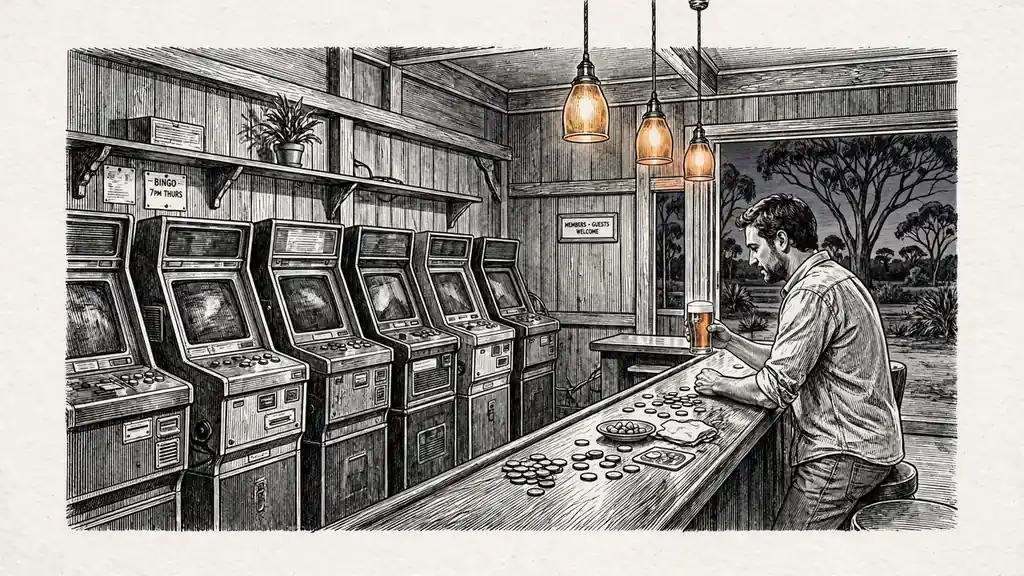
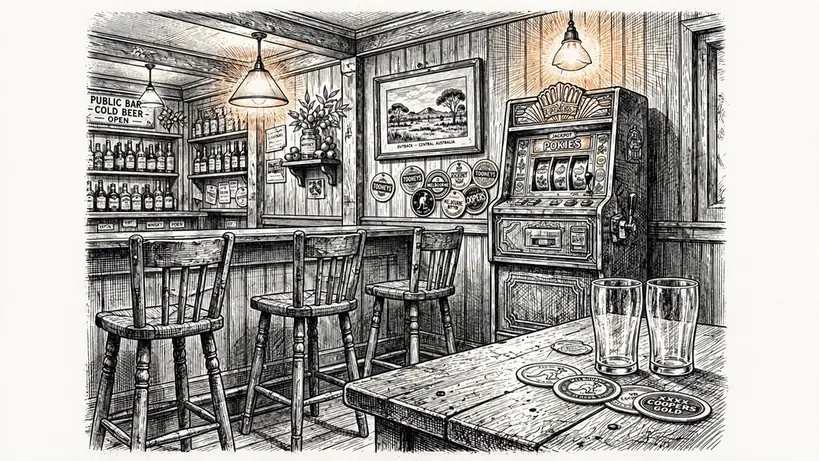
The legal land-based picture is more complicated than the phrase “Australian pokies” suggests. Online casino games remain prohibited for Australian customers, but gaming machines do exist in regulated physical venues. Their distribution is a matter of state and territory policy: clubs, hotels and casinos do not all operate under the same settings, and the machine count can differ sharply between jurisdictions.
The figures below come from a specialist industry overview, so they should be read as a snapshot of the stated arrangements rather than as a universal rule for every venue.
Australian Capital Territory
The ACT has 5,200 gaming machines in clubs and hotels. Casino Canberra has no gaming machines, an arrangement that makes the territory’s physical market look unusual even before its control measures are considered.
The ACT also applies a five-hour gambling break and sets a maximum bet of $10 per spin. These rules place the machines inside a deliberately structured environment: access exists, but uninterrupted play is not treated as an invisible personal matter. A pause is built into the system.
That contrast matters when online searches blur together land-based machines, foreign gambling sites and payment terms such as PayID. A login or a payment label cannot recreate the legal status of a physical venue. Geography still does the heavy lifting.
Northern Territory
The Northern Territory has 2,195 gaming machines located across clubs, hotels and two casinos: Sky City and Lasseters. Here, the machines are distributed through several kinds of venue rather than concentrated in a single casino setting.
The territory therefore shows another version of the Australian model. The same broad category of machine can appear in a club, a hotel or a casino, while the venue itself remains part of the regulatory distinction. A foreign website describing New Zealand online pokies for real money is not evidence that an Australian resident has found an equivalent local product. Nor does an e-wallet login transform an offshore service into a licensed Australian venue.
The physical map is less glamorous than the search-bar language. It is also more honest. Clubs, hotels and named casinos are identifiable places; a new online account is merely an access route, not proof of authorisation. In Australia, the legal encounter with gaming machines is therefore grounded in premises, jurisdiction and supervision—not in the novelty of a website or the speed of a payment screen.
State Rules Make the Same Machine a Different Proposition
A profile review reports that South Australia has 13,113 gaming machines: 12,118 in clubs and hotels, and 995 at Adelaide Casino. The same source describes a notably physical payment rule: note acceptors are banned, so the machines accept coins only.
Tasmania’s 3,680 machines are located in hotels, clubs, and two casinos, Wrest Point and Country Club. A profile review gives them a minimum spin rate of three seconds, a maximum bet of $5 per spin, and no more than 30 lines.
Victoria has 30,000 gaming machines, divided between 27,500 in clubs and hotels and 2,500 at Crown Melbourne. In Victorian clubs and hotels, the maximum bet is $5 and the minimum RTP is 87%; casinos have no maximum bet under the stated comparison.
The figures come from a profile review, so they should be read as reported regulatory detail rather than as a universal description of every machine. Still, the contrast is clear: location, pace, payment hardware, line limits, bet limits and RTP settings can all change across borders. The machine may look familiar. The rules around it are not.
Published by the Casino Info Au team.