Best Live Casino Online Australia: Local Rules
 Available in US
Explore streamed dealer games, platform technology, bonuses, payments and the local rules that shape live casino play.
Table of Contents
- Live Casino in Australia: The Table Is Real, the Rules Are Local
- The Software Behind the Dealer: Platforms, Providers and Fair Play
- From Blackjack Tables to Live Casino Poker
- Live Casino Games Worth Recognising Before the Stream Begins
- Live Roulette Online: The Wheel, the Table and the Fine Print
- What a Live Casino Dealer Adds to the Room
- Live Casino Bonuses: Where the Invitation Becomes a Contract
- How to Play Live Casino Online Without Losing the Plot
- Live Casino Apps, Downloads and the Quiet Work of Security
- Live Casino AU: Payments, Verification and the Boundary of Legality
Live Casino in Australia: The Table Is Real, the Rules Are Local
A live casino online is not a bank of animated reels dressed up with a dealer’s face. It is a streamed gambling table: a camera shows a real person dealing cards, spinning a wheel, or managing the pace of play, while an online interface records bets and displays the result. The room may be remote, but the table is presented as a shared event rather than a solitary sequence of computer-generated images.
That distinction matters in Australia, where the vocabulary of gambling often carries a local history. “Pokies” refers to electronic gaming machines, particularly in land-based venues. A live casino belongs to a different family. Its defining feature is the broadcast table and the presence of a dealer, not reels, paylines, or the familiar stop-start rhythm of a pokie. Calling every online gambling product a casino game may be convenient; it is not very precise.
A streamed table is still an online casino product
The appeal of an online live casino lies in its imitation of a physical room. A dealer appears on screen. A table has a visible layout. Bets open and close according to the table’s procedure. Other participants may be represented through on-screen betting markers or a list of wagers, creating the impression of company even when the punter is sitting alone with a laptop or phone.
This shortlist highlights online casino operators available to Australian players, with attention to licensing, bonuses, deposit requirements and payout details where provided. Use the individual verdicts to identify which options best match your priorities for live casino play in 2026.
License: Curacao eGaming Licence · Min. deposit: A$20 Skycrown Casino operates under a Curacao eGaming Licence and has a minimum deposit of A$20. Its profile is suited to players looking for a licensed option with a moderate entry requirement.
License: Curacao eGaming Licence · Min. deposit: A$10 PlayWest holds a Curacao eGaming Licence and accepts deposits from A$10. It stands out for combining licensing information with a low minimum deposit.
Bonus: up to A$750 + 50 jackpot spins, 35x wagering · Payout speed: crypto ~90 minutes, fiat 1-5 days · Min. deposit: A$30 Kingmaker offers up to A$750 plus 50 jackpot spins with 35x wagering. Crypto payouts are listed at around 90 minutes, while fiat withdrawals take 1–5 days, and the minimum deposit is A$30.
License: Curacao (operating since 2017) · Bonus: 250% up to A$2,000 + 50 free spins on the first of six deposits · Min. deposit: A$20 Uptown Pokies has operated under Curacao since 2017. Its promotion offers 250% up to A$2,000 plus 50 free spins on the first of six deposits, with a A$20 minimum deposit.
License: Curacao · Bonus: up to A$10,000 multi-stage + 500 free spins · Min. deposit: A$20 (POLi) Lucky Dreams operates under Curacao and advertises a multi-stage bonus of up to A$10,000 with 500 free spins. The minimum deposit is A$20 when using POLi.
License: Curacao eGaming (Roby Games Ltd) · Bonus: 100% up to A$750 + 200 free spins Roby Casino is licensed through Curacao eGaming under Roby Games Ltd. Its listed offer is 100% up to A$750 plus 200 free spins.
License: Curacao · Bonus: 100% up to A$500 + 200 free spins, 10x wagering · Payout speed: crypto 30-60 minutes, fiat 1-5 days · Min. deposit: A$10 Wild Tokyo operates under Curacao and offers 100% up to A$500 plus 200 free spins with 10x wagering. The minimum deposit is A$10, while crypto payouts are listed at 30–60 minutes and fiat payouts at 1–5 days.
License: Curacao eGaming OGL/2024/923/0383 (Antillephone N.V.) · Bonus: up to A$2,000 + 100 free spins across 2 deposits · Min. deposit: A$30 WinSpirit Casino holds a Curacao eGaming licence, OGL/2024/923/0383, issued by Antillephone N.V. Its offer reaches A$2,000 plus 100 free spins across two deposits, with a A$30 minimum deposit.
License: Curacao · Bonus: up to A$2,000 Golden Pokies operates under Curacao and advertises a bonus of up to A$2,000. The available information presents it as a straightforward option centred on its promotional offer.
Bonus: up to A$7,500 + 550 free spins across 10 deposits, 50x wagering · Payout speed: crypto under 1 hour, PayID 1-3 business days · Min. deposit: A$20 (A$30 to qualify for the bonus) Ricky Casino offers up to A$7,500 plus 550 free spins across 10 deposits, with 50x wagering. Crypto payouts can take under an hour, PayID withdrawals take 1–3 business days, and the minimum deposit is A$20, or A$30 to qualify for the bonus.
That atmosphere is the product’s social theatre. It does not turn an offshore website into an Australian casino, and it does not change the legal category of the game. A polished broadcast remains an online casino service when it offers roulette, blackjack, baccarat, or another casino table to a person in Australia.
This is where phrases such as “best live casino online Australia” can become misleading if treated as a legal description. “Best” may refer to picture quality, table choice, interface design, or the style of presentation. It cannot, by itself, mean locally licensed, approved, or protected under an Australian online casino framework. There is no Australian casino licence for this product.
The Interactive Gambling Act 2001 is the main law governing online gambling in Australia. Under that framework, online casino games offered to Australian customers are prohibited interactive gambling services. That includes live dealer tables. The law is less interested in whether the room looks elegant than in whether a provider is offering a prohibited online gambling service to an Australian customer. A velvet backdrop does not perform regulatory magic.
The player and the provider are not treated alike
The legal distinction is important because public discussion often collapses two separate questions:
- Is the provider allowed to offer the service to Australians?
- Is the individual player committing an offence by using an offshore site?
Under the Interactive Gambling Act, enforcement targets the provider rather than the player. Australians are not prosecuted under the Act merely for placing bets at offshore sites. That does not make the service locally legal, nor does it give the player the protections attached to a domestically regulated product. It simply means that responsibility under this law is directed primarily at the business supplying the prohibited service.
The difference is easy to miss in a market where a page may use Australian dollars, display local spelling, and offer an Australian-facing customer journey. Those details describe marketing and accessibility, not an Australian casino licence. A website can be available from Australia without being authorised to provide online casino games there. Availability is not approval. Short sentence. Important one.
Live casino is not the same as every other online gambling product
Australia does not place all online gambling in one legal basket. Sports and racing wagering can be licensed at state and territory level, and lotteries are permitted products. Online casino games occupy a narrower and more restrictive position. A live dealer table is therefore not made lawful by association with a legal betting service, a familiar payment label, or a business that operates other gambling products under a different licence.
Nor does the word “Australia” in a page title settle the matter. “Live casino Australia” may describe an audience, a currency, a language setting, or a marketing region. It does not establish local authorisation. The same applies to “live online casino Australia”, “online live casino Australia”, and the many other arrangements of those words that appear in commercial copy. Geography in a headline is not geography in law.
The human presentation can make the boundary feel less severe. A dealer greets the table, explains the action, and follows a recognisable routine. The setting resembles a casino floor, with none of the visual distance of a conventional betting screen. Yet the decisive relationship remains digital: the provider is offering an online casino service to a customer located in Australia.
Regulatory Warning Online casino games, including live dealer tables, are prohibited interactive gambling services under the Australian Interactive Gambling Act 2001.
What the phrase should mean in practice
A sensible description of the best live casino online in Australia should therefore separate experience from status. Experience concerns the table itself: whether the stream is clear, whether the layout is readable, and whether the pace makes sense. Status concerns the provider’s legal position, the jurisdiction in which it operates, and the limits of protection available to an Australian customer. These are different kinds of information and should not be blended into one flattering label.
The same caution applies to “online casino live”, “casino online live”, and “live online casino”. All describe a format in which casino play is delivered through a live video table. None is a regulatory category. Search language is untidy; legislation is not obliged to follow it.
For Australian readers, the central fact is consequently plain. A real dealer and a real broadcast do not create a domestic licence. The table may be real, the performance may be convincing, and the distinction from pokies may be technically clear. The rules remain local.
The Software Behind the Dealer: Platforms, Providers and Fair Play
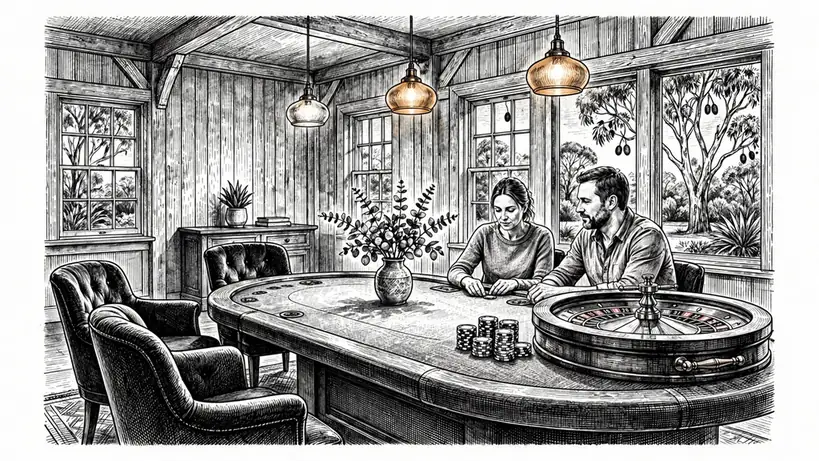
A live casino table is a broadcast assembled from several layers. The camera captures the studio; the platform sends that stream to a browser or app; the game interface records bets, displays limits and reports outcomes; the operator connects the whole arrangement to an account system. The dealer may appear to be the centre of the room, but the software is doing the quieter work around the frame.
That distinction matters. A polished lobby is not a licence, just as a sharp video feed is not evidence of fair treatment. A provider can supply impressive live casino software to an operator in a market where the operator has no right to offer the product. Technology travels more easily than regulation. It has no passport.
What a live casino software provider actually supplies
A live casino software provider generally builds or supplies the technical package behind the table rather than owning the gambling relationship with the punter. That package may include studio broadcasting, table controls, betting interfaces, account integration, game history, chat functions and operational dashboards. The operator then places those components inside its own website or app, attaches terms and account procedures, and presents the finished room under its own brand.
This is why several sites can look uncannily alike. They may be using the same platform, the same studio network or the same interface templates, even when their names and promotional language differ. “Best live casino software” is therefore not a meaningful regulatory category. It usually describes a judgement about presentation, speed, coverage or integration.
The phrase live casino solution sounds grander than it is. In practice, it may mean a modular service, a turnkey platform or an application programming interface that lets an operator connect tables to its own front end. None of those arrangements decides whether Australians may legally be offered online casino games. The legal question remains attached to the service and the market, not to the elegance of the code.
A provider may also deliver randomised game components for products that are not streamed dealer tables. That is a separate technical layer from the camera feed. In pokie software, for instance, the reels and outcome logic are handled by a random number generator rather than by a dealer’s visible action. Each spin is independent; the previous result has no bearing on the next one. A dramatic sequence of misses is not software building a debt, and a recent win does not make another win “due”.
Develops or supplies games, studio feeds, and platform tools.
Connects tools to accounts, interfaces, and operational controls.
Offers the service under its own brand and customer terms.
Randomness, RTP and the limits of a number
RTP, or Return to Player, is a long-term theoretical average. It is not a promise about an individual session, a particular evening or the next outcome. Software can calculate and display the relevant mathematics, but it cannot turn a statistical expectation into a personal entitlement.
That is an unfashionable feature of probability: it refuses to remember. A game does not become generous because the interface has been open for hours, nor does it become cold because several losing outcomes have appeared. The screen may show patterns; the random process does not owe them a story.
Where licensed Australian-facing platforms are involved, independently audited random number generators are required. Independent auditing is important because it places the testing outside the operator’s own assurances. It does not mean that every result is favourable, and it does not erase the difference between a compliant technical system and a lawful casino product. Fairness of outcomes and legality of offering are related checks, not interchangeable ones.
For streamed tables, the software has a different task. It must register the betting window, close it at the appropriate point, synchronise the visible table action with the account record and display the settled result. The broadcast makes the event observable; the platform makes it administratively usable. If those two layers drift apart, confidence disappears quickly.
Platform, provider and operator
The three names are often blurred in casino marketing, although their responsibilities are not identical.
- The provider develops or supplies the games, studio feed, platform tools or integration.
- The platform connects those tools to accounts, interfaces, reporting and operational controls.
- The operator offers the service under its brand and sets the customer-facing terms.
A software supplier can have a strong technical reputation without making an operator trustworthy. Conversely, a familiar operator may use third-party infrastructure that tells little about how its tables are actually run. The sensible assessment therefore follows the chain instead of stopping at the most recognisable logo.
This also explains why a “best live casino site” cannot be identified from software alone. The site’s permissions, terms, identity checks, complaint route and market position belong to the operator. The provider’s name may help establish who built the machinery, but it does not supply a missing local authorisation.
Free access is not a compliance shortcut
Searches for live casino online free or free live casino online often point towards demonstrations, practice modes or social versions of table games. These can show how a user interface behaves without involving a cash balance. They should not be confused with real-money access, and the absence of a deposit does not prove that the underlying operator is suitable for a particular market.
The same caution applies to international labels such as “live casino Singapore”. A table may be streamed across borders, and software may be marketed in several languages, but geographic availability is not a universal permission slip. A platform designed for one jurisdiction does not acquire Australian approval merely by loading in an Australian browser.
The useful question is therefore not whether the room looks modern. It is whether the technical claims, the provider relationship and the operator’s legal position survive separate inspection. Good software can make a table legible. It cannot make a prohibited service lawful.
From Blackjack Tables to Live Casino Poker
A live casino provider does more than place a camera beside a table. It supplies the game catalogue, dealer-led formats, table presentation, and the connection that lets an operator place those experiences inside its own gambling service. The result may look like one casino to the punter, although several different businesses sit behind the felt.
Live Casino Formats Live casino products include various styles of play, such as traditional table games (blackjack, roulette, baccarat), poker-style formats, theatrical game shows, and electronic casino games like pokies.
Blackjack is usually the clearest starting point. Its structure is familiar: a dealer manages the hand while participants make decisions through an online interface. The attraction is not merely the cards. It is the visible ritual—the shuffle, the pause before another card, the dealer’s announcement that turns a mathematical sequence into a small public performance. A provider must make that rhythm legible on screen, with betting controls and table information that do not compete with the action.
Roulette belongs to the same broad family but creates a different kind of attention. The wheel supplies a visible event, while the interface records selections and closes betting. Baccarat is more restrained, built around banker and player outcomes rather than a long chain of individual decisions. Each format therefore asks for a different table design, even when the underlying delivery model is similar.
Where live casino poker fits
Live casino poker is a loose but useful label. Some formats resemble traditional poker because they use familiar hand rankings or player-versus-player language. Others are casino games built around poker combinations, with the operator retaining the house edge. The distinction matters: the presence of cards and a dealer does not automatically make a game a conventional poker table.
A provider’s catalogue may include these poker-style tables alongside blackjack, roulette, baccarat, game-show formats, and other dealer-led products. The operator chooses which rooms to display, how they are grouped, and which markets can access them. In that sense, the provider supplies ingredients rather than a complete local identity. The menu is imported; the storefront is assembled elsewhere.

This is also why a polished lobby proves little about the company behind it. A live casino platform can offer a broad range of tables while leaving the operator responsible for its own customer-facing obligations. Reviews of live casino services are therefore more useful when they describe the actual table selection and operating terms, rather than treating visual polish as evidence of quality.
From catalogue to casino
A live casino API provider typically offers a technical route through which games, table status, account actions, and results can be connected to an operator’s service. The API is the plumbing between the catalogue and the visible lobby. It is not a gambling licence, a regulator, or a guarantee of fair treatment. Calling something an API integration does not improve its legal character.
The same applies to the phrase “live casino integration”. It may describe a direct connection, an aggregator’s package, or a branded table embedded within another platform. What matters for the table experience is whether the connection presents current availability, accurate bet records, and clear game information without making the user guess what happened to a wager.
Mobile live casino adds another layer of practical design. A phone screen has less room for the dealer, wheel, cards, controls, and account information. A mobile table must preserve the sequence of play without turning every action into a hunt through menus. The login sits at the entrance, not in the game itself, but a broken route from live casino login to the selected table can make a sophisticated catalogue feel strangely remote.
For Australians, these distinctions sit beside a narrower legal reality. Permitted online gambling products include pre-event sports and racing wagering, lotteries, and keno; casino table games are not part of that domestic online product set. Legal alternatives include land-based casinos, licensed bookies, and lotteries. The table may be streamed from elsewhere. The rulebook does not travel with it.
Roulette Checklist
- Check if the wheel and result history are clearly visible
- Verify the current betting phase and countdown timer
- Confirm the distinction between inside and outside bets
- Review the specific rules for special bets and disputed outcomes
Live Casino Games Worth Recognising Before the Stream Begins
The phrase live casino games covers a surprisingly broad room. A streamed table may be built around a familiar card game, a wheel, a host-led contest, or a ruleset designed mainly for spectacle. The camera makes them look related; the decisions, pace and information on screen do not always match.
Four useful families
Traditional table games follow established casino structures. Blackjack revolves around the relationship between the player’s hand and the dealer’s hand. Roulette places wagers on numbers, colours or combinations before the wheel settles. Baccarat presents a comparison between two designated hands, with the table layout doing much of the explanatory work. Their appeal is recognisable procedure: the action may be online, but the vocabulary comes from the physical table.
Poker-style live games need a little care in description. Some use poker imagery or hand rankings without offering a conventional player-versus-player poker contest. Others place the punter against a dealer or a fixed outcome. The name alone is not enough; the information panel should explain whether the result depends on cards, a bonus feature, or a separate side wager.

Game-show formats turn the table into a stage. These live casino game shows use hosts, bright graphics and timed betting windows, often making presentation part of the product rather than a decoration around it. The pace can feel more theatrical than a quiet card table. That does not make the underlying wager simpler. A colourful wheel remains a wheel, and a bonus round remains subject to its stated rules.
Electronic casino games are a different category, even when they appear beside streamed tables. Live casino slot games are not dealer-led table play at all. They belong to the pokies family, where reels, RTP and volatility describe the mathematical profile. Online pokies and slot machines use the same reels, RTP and volatility; the distinction is chiefly local language, with pokies the natural Australian term. Stakes can range from a few cents to hundreds of dollars per spin, depending on the game and platform.
What separates one format from another?
A practical comparison starts with the table information, not the title. Three details matter:
- Rules: which outcomes are available, how winning combinations are defined, and whether side wagers follow separate conditions.
- Pace: whether betting closes after a short window, whether several rounds can be followed in quick succession, and how much time is given to decisions.
- Presentation: a restrained dealer table, a graphics-heavy game show, or a reel-based interface each creates a different sense of participation.
The word “live” can therefore describe the broadcast rather than the game’s complexity. A dealer may explain the action, but the displayed rules still govern it. A host may keep the room moving, but speed is not evidence of better odds. Nor does a polished interface turn a prohibited product into a permitted one in Australia.
Free live casino games can be useful for learning the layout and sequence of a format, provided the version clearly states that no real-money wager is involved. They do not reproduce every pressure of a paid session. A demo is rehearsal, not evidence about personal results.
The most useful vocabulary is plain: table game, poker-style format, game show, or pokie. Once those labels are separated, the stream becomes easier to read—and considerably less mysterious.
Live Roulette Online: The Wheel, the Table and the Fine Print
Live roulette has a simple visual promise: a real wheel, a real ball, and a camera close enough to make the table feel present. Yet the picture is only one part of the assessment. A polished casino live roulette stream may show an attractive room while leaving the important questions in small print: which bets are accepted, when wagers close, how cancelled rounds are handled, and what information remains available after the result.
Human Element A live dealer provides the rhythm and visibility of the game, but their presence is a matter of presentation and does not impact the underlying mathematical probability or legal status.
The useful distinction is between the broadcast and the betting contract. The broadcast creates the table experience. The contract defines what happens when the ball lands, a connection fails, or a wager is placed after betting has closed. A live roulette online casino worth examining makes these conditions visible before play, not after an argument.
Reading the wheel and the table
A credible live roulette table should display the wheel clearly enough for the result to be followed without guesswork. The interface should identify the current round, show the betting phase, and mark the winning number once the spin is complete. The physical wheel matters, but so does the record around it. A result history can help describe recent rounds; it cannot predict the next one.
That point is less glamorous than the spinning camera, and more important. Each round has its own outcome. Previous numbers do not create a pattern that compels the wheel to correct itself. A run of red does not make black “due”. Roulette is wonderfully resistant to narrative management.
The betting panel also deserves attention. It should distinguish inside bets from outside bets, show the stake before confirmation, and make the closing point unmistakable. Rules may vary between tables, including the treatment of special bets and disputed outcomes. The table label alone does not settle those details.
What the numbers actually say
RTP, or Return to Player, is a long-term theoretical average. It describes expected mathematical performance across a large number of rounds, not the result of an evening at an online casino live roulette table. It does not promise that a particular session will return anything, nor does it turn a losing sequence into evidence of a coming win.
For that reason, a roulette page that presents RTP as a personal forecast is explaining the number badly. A clearer page separates the theoretical figure from the ordinary uncertainty of individual spins and states the relevant rules beside the game, rather than hiding them behind a general help link.
The legal label is not a safety badge
“Live roulette casino” describes a product format, not an Australian licence. A roulette live casino can be streamed to an Australian-facing audience without becoming a domestically licensed online casino. The presence of a dealer, a visible wheel, or a familiar platform name does not establish local approval or consumer protection.
Where a provider is permitted to serve its market, independently audited random number generators are required for licensed Australian-facing platforms. That requirement belongs to the relevant licensed environment; it should not be casually transferred to every offshore table carrying Australian currency or language.
The same caution applies to the phrase “best live casino sites”. A prominent table, a generous-looking banner, or live casino bonuses may describe presentation and promotion. None of them answers the narrower questions that matter at the roulette table: what is accepted, what is recorded, and what the published conditions actually say.
What a Live Casino Dealer Adds to the Room
A live casino dealer is the human centre of an online table. The cards, wheel, or betting layout may be shown through a screen, but the dealer supplies the rhythm that makes the room feel less like a menu and more like a shared place. That distinction matters. An online casino with live dealers is not merely a catalogue of digital games with a camera pointed at it; it is a broadcast organised around people, procedure, and attention.
- Read the full bonus contract and wagering requirements
- Identify the expiry date of bonus funds
- Check which specific games qualify for the promotion
- Assume a “welcome bonus” equals a local licence
- Mistake visual polish for regulatory compliance
- Ignore the small print regarding maximum conversion limits
The dealer welcomes new players, announces the stage of the round, accepts bets, closes the betting window, and presents the result. In a busy casino with live dealers, this sequence has a quiet social order. The presenter keeps the table moving while allowing enough time for decisions, explains visible events, and responds to ordinary questions through the chat or table interface. A good host is not an entertainer pasted over the game. The host is the person who makes the procedure legible.
The human layer of the table
Presentation styles vary. Some live casino dealers are formal and restrained, speaking only when the table requires it. Others are warmer, acknowledging players by screen name and filling pauses with light conversation. Neither style changes the rules, but each changes the atmosphere. A crowded table can feel brisk and communal; a quieter one can feel almost private, although the camera never quite permits privacy.
The dealer also acts as a visible witness to routine. Cards are shown, hands are dealt in an announced order, and the result is recorded on the interface. In live dealer blackjack, that visible sequence helps separate the table experience from an automated reel or a concealed button press. The dealer does not determine the outcome, and charm is not a probability. It is presentation.

That point is easy to lose when the room is polished. A smiling presenter can make a table appear trustworthy, but trust should rest on the operator’s published terms, controls, and applicable oversight—not on a pleasant voice. Where a platform offers randomised casino games, licensed Australian-facing platforms are required to use independently audited random number generators. A dealer’s presence is not a substitute for that technical assurance.
Conversation without confusion
Interaction has limits. Dealers can clarify table procedures, repeat a result, or explain where the next action appears. They cannot alter a wager, repair an unfavourable hand, or turn a private hunch into an advantage. In live casino Dragon Tiger, for instance, the presenter may identify the two sides and announce the outcome, but the ritual remains a ritual, not a negotiation.
For a live casino for real money, that boundary is especially important. The room may look social, yet every decision still belongs to the account holder, and the dealer is neither adviser nor companion. The camera creates proximity. It does not create responsibility on the other side of the table.
Essential Summary
- Online casino games are prohibited under the Australian Interactive Gambling Act 2001.
- A polished stream or professional dealer does not grant a local licence.
- Software providers, platforms, and operators serve different technical and legal roles.
- Always verify terms, identity requirements, and jurisdictional status before play.
The most useful dealer is therefore not the loudest one. It is the person who keeps the pace clear, the actions visible, and the mood from disguising the mechanics. A human face can soften a digital room. It cannot soften the consequences of a careless decision.
Live Casino Bonuses: Where the Invitation Becomes a Contract
A live casino bonus is not a badge of quality. It is a set of conditions attached to an offer, and the attractive sentence usually occupies less space than the contractual small print beneath it. A welcome bonus, deposit match or free-bet-style promotion may look similar on a live casino USA site, a live online casino USA platform, or an Australian-facing service. The legal position is not similar.
Before considering any promotion, the terms should identify:
- the wagering requirement and which bets count towards it;
- the expiry date, including whether unused bonus funds disappear;
- the maximum bet permitted while the bonus is active;
- the live games that qualify, and those excluded entirely;
- any maximum conversion or withdrawal condition;
- the deposit and identity conditions attached to eligibility.
The wording matters because a table may be available in the lobby yet contribute nothing to bonus completion. Roulette, blackjack and other live formats can carry different weighting, or be restricted altogether. A promotion that says “all games” without defining how each game counts is not clarity; it is decorative fog.
The same caution applies to offers presented as an Australian live casino promotion. Real-money online casinos offering casino games to people in Australia are prohibited under the Interactive Gambling Act 2001. There is no Australian licence for online pokies, and none has ever existed; online live casino products sit within the same prohibited online-casino boundary. A bonus therefore cannot turn an offshore invitation into a locally licensed product.
Nor does a licence from another jurisdiction, where one exists, prove that the bonus is fair or that every clause is generous. It says something about the provider’s regulatory setting, not about the wisdom of accepting a particular offer. A polished USA-facing page can have its own rules; its availability, terms and protections do not automatically travel across borders.
The sensible reading order is therefore unglamorous: exclusions first, wagering rules second, expiry and maximum-bet clauses after that. Only then does the headline offer deserve attention.
Read the contract, not the confetti.
How to Play Live Casino Online Without Losing the Plot
Playing at a live table begins with navigation, not drama. An online casino normally presents a lobby where games are grouped by type, language, table limit, or opening hours. Selecting a title opens the streamed table, the betting panel, and the information needed to follow the round. The useful skill is not speed. It is knowing which part of the screen does what.
Joining and Reading the Table
Before placing a bet, the table display should make several things plain:
- the current betting phase;
- the countdown before bets close;
- available betting areas;
- minimum and maximum stakes;
- the dealer’s actions and the result of the round;
- the balance and transaction history.
The betting panel is the functional centre. A chip or stake selector chooses the amount, while the table layout shows where that amount has been placed. Once betting closes, the controls may become inactive until the next round. That pause is important: it separates a decision from the result, rather than allowing a hurried reaction to the previous hand or spin.
For electronic games, the same discipline applies. Each spin on a pokie is independent; the previous result has no bearing on the next outcome. A dramatic sequence on the screen is presentation, not a signal.
One Table, Several Englishes
The language surrounding live casino play changes with the market. Australian material may use “pokies” for electronic gaming machines, while Canadian pages more often use “slots”. Malaysian-facing sites may combine English casino terms with local payment and customer-support language. A “live dealer” table remains recognisable, but menus, currencies, and availability can differ.
The same caution applies to references to live casino Malaysia, live casino Canada, or live casino India. A platform serving one jurisdiction does not thereby serve another, and a familiar interface says nothing about Australian legality. Offshore casinos operating from Curaçao, Anjouan, or similar jurisdictions may accept Australian players, but acceptance is not the same as domestic licensing or local consumer protection.
Australian residents can legally play online pokies at licensed offshore casinos, while online casino products are not domestically licensed. The distinction is easy to miss in a polished lobby. It should not be. A table can be simple to join and complicated to place in its legal setting.
Plain labels help. Play live casino online only after the game rules, table conditions, and jurisdictional position are clear. No mystery required.
Live Casino Apps, Downloads and the Quiet Work of Security
A live casino can be opened in a browser without installing anything. That is often the simplest route: the table loads in the existing browser, while the account, stream and betting interface remain in one place. A dedicated live casino app may feel tidier on a phone, but its value is practical rather than ceremonial. It should make the same account information, game rules and responsible-play controls visible rather than hiding them behind a polished icon.
An app download deserves the same scrutiny as the website it represents. Before installation, the operator should identify the publisher, explain what permissions the app requires and provide a clear route to support. After installation, account details should be protected by secure sign-in, and sensitive actions such as changing payment information or requesting a withdrawal should trigger appropriate verification. A glossy interface is not evidence of lawful operation. It is only a glossy interface.
The quiet work begins when money moves. A platform should state its minimum deposit, with AUD 10 cited by many casino listings as a common entry point, while the applicable maximum must be read in the operator’s own terms. A specialist industry review reports deposit ceilings between A$5,000 and A$10,000 per transaction and withdrawal limits between A$500 and A$2,000 per request for standard players; those figures describe that review’s surveyed operators, not a universal Australian rule.
Before play or withdrawal, visible checks should include identity verification, residency information, accepted payment methods, transaction limits and the documents that may be requested. The withdrawal page should not reveal material conditions only after a request has been submitted. Nor should an app imply that a successful download establishes consumer protection.
“Live casino API” belongs to the technical vocabulary. An API can connect a table feed, account system or game interface to another service; it does not create an Australian casino licence, certify fairness by itself or turn a provider into a regulator. The same distinction applies to labels such as “top live casino” and “top live casino websites”. They are editorial descriptions, not legal categories.
For a browser, app or download, the useful test is therefore plain: identifiable operator, readable terms, visible security measures and account checks that appear before trouble, not after it. Technology can smooth the entrance. It cannot repair a missing legal foundation.
Live Casino AU: Payments, Verification and the Boundary of Legality
For anyone comparing a live casino AU platform with a live casino UK service, the first difference is not the dealer’s accent or the table layout. It is the legal boundary around the product. Under the Interactive Gambling Act 2001, real-money online casinos offering pokies to Australians are banned. The same prohibition covers online casino formats such as roulette, blackjack and live-dealer tables when offered to an Australian customer.
That makes the phrase “Australian casino” unusually slippery. It may describe language, currency, customer support or marketing, but it does not establish an Australian casino licence. No such domestic licence exists for real-money online casino games. A polished table is still only a table. Regulation does not arrive with the broadcast.
Payments therefore deserve more than a glance at familiar logos. Before depositing, the relevant checks are whether the service is legally available, which payment methods it accepts, whether identity verification is required, and what withdrawal conditions apply. Verification is not merely an administrative nuisance: an operator may request identity and residency documents before releasing funds, and the name on the payment account should correspond with the account holder. Any mismatch can turn a routine withdrawal into a prolonged exchange of messages.
The comparison with an online live casino UK site should remain just that—a comparison. A service lawful under British rules is not thereby lawful for an Australian resident. The jurisdiction attached to the operator, the customer’s location and the product being supplied all matter. Geography is not decorative text.
For Australians seeking legal gambling options, the permitted alternatives include land-based casinos, licensed bookmakers and lotteries. Online live casino play sits outside that narrow domestic set. The boundary is inconvenient, but clear. Keep it that way.
Are best online pokies Australia real money platforms required to use certified RNGs?
Yes, licensed Australian-facing platforms are required to use independently audited random number generators.
What are the consequences of violating the Interactive Gambling Act?
The Interactive Gambling Act prohibits providers from offering online casino games to people in Australia, and enforcement targets the provider rather than the player.
What is the difference between licensed Australian wagering operators and offshore pokies sites?
Licensed Australian wagering operators may offer permitted products such as pre-event sports and racing wagering, lotteries, and keno. Offshore pokies sites offer online casino games that are prohibited from being offered to Australians and do not hold an Australian licence for online pokies.
Prepared by the Casino Info Au editorial staff.