Real Money Casino Table Games in Australia
 Available in US
Compare licensed land-based casinos, offshore platforms, live dealers, odds, payments, and the limits of free-play table games.
Table of Contents
- What Australians Can Actually Play: The Legal Line Around Table Games
- The Table Games Found Online—and the People Behind the Deal
- From Casino Near Me to Live Dealer: Where Opening Hours Still Matter
- The House Always Has a Number: Odds, RTP, and Bonus Fine Print
- Who Runs the Table When the Dealer Is Not the Story?
- Reading a House-Edge Chart Without Mistaking It for a Promise
- Free Table Games Without a Download: A Different Kind of Play
- Bitcoin Table Games Versus Ordinary Casino Payments
- Why Pai Gow Poker Keeps Its Own Place at the Table
- Table Games in Canadian Casinos: A Useful Comparison, Not an Australian Licence
What Australians Can Actually Play: The Legal Line Around Table Games
For anyone searching for real-money casino table games in Australia in 2026, the first fact is not a game name. It is the legal boundary around the table.
Australia does not have one national gambling regulator or a single statute governing every form of gambling. Responsibility is divided between the Commonwealth and the states and territories. That division matters because a table inside a licensed Australian casino belongs to a different legal world from a roulette or blackjack interface offered through an offshore website.
The physical casino is a state matter
Land-based casino table games are regulated by the relevant state or territory authority. A casino operating in Australia must therefore exist within the licensing and supervisory system of the jurisdiction in which its premises are located. The rules are local, even though the social ritual looks familiar everywhere: chips, felt, a dealer, surveillance, and a house edge dressed in formal clothing.
That is the setting in which table games at a casino can be offered lawfully. The location is not a decorative detail. It is part of the legal product.
This list highlights casino operators for Australians exploring real-money table games in 2026. Use the details below to assess licensing, bonuses, deposit requirements and payout information where available.
License: Curacao eGaming Licence · Min. deposit: A$20 Skycrown Casino operates under a Curacao eGaming Licence. Its minimum deposit is A$20.
License: Curacao eGaming Licence · Min. deposit: A$10 PlayWest operates under a Curacao eGaming Licence. The minimum deposit is A$10.
Bonus: up to A$750 + 50 jackpot spins, 35x wagering · Payout speed: crypto ~90 minutes, fiat 1-5 days · Min. deposit: A$30 Kingmaker offers up to A$750 plus 50 jackpot spins with 35x wagering. Crypto payouts take approximately 90 minutes, while fiat payouts take 1–5 days; the minimum deposit is A$30.
License: Curacao (operating since 2017) · Bonus: 250% up to A$2,000 + 50 free spins on the first of six deposits · Min. deposit: A$20 Uptown Pokies operates under Curacao licensing and has been operating since 2017. Its offer includes 250% up to A$2,000 plus 50 free spins on the first of six deposits, with a A$20 minimum deposit.
License: Curacao · Bonus: up to A$10,000 multi-stage + 500 free spins · Min. deposit: A$20 (POLi) Lucky Dreams operates under a Curacao licence and offers a multi-stage bonus of up to A$10,000 plus 500 free spins. The minimum deposit is A$20 when using POLi.
License: Curacao eGaming (Roby Games Ltd) · Bonus: 100% up to A$750 + 200 free spins Roby Casino operates under a Curacao eGaming licence held by Roby Games Ltd. Its stated promotion is 100% up to A$750 plus 200 free spins.
License: Curacao · Bonus: 100% up to A$500 + 200 free spins, 10x wagering · Payout speed: crypto 30-60 minutes, fiat 1-5 days · Min. deposit: A$10 Wild Tokyo operates under a Curacao licence and offers 100% up to A$500 plus 200 free spins with 10x wagering. The minimum deposit is A$10; crypto payouts take 30–60 minutes and fiat payouts take 1–5 days.
License: Curacao eGaming OGL/2024/923/0383 (Antillephone N.V.) · Bonus: up to A$2,000 + 100 free spins across 2 deposits · Min. deposit: A$30 WinSpirit Casino holds Curacao eGaming OGL/2024/923/0383, issued by Antillephone N.V. Its offer provides up to A$2,000 plus 100 free spins across two deposits, with a A$30 minimum deposit.
License: Curacao · Bonus: up to A$2,000 Golden Pokies operates under a Curacao licence and advertises a bonus of up to A$2,000.
Bonus: up to A$7,500 + 550 free spins across 10 deposits, 50x wagering · Payout speed: crypto under 1 hour, PayID 1-3 business days · Min. deposit: A$20 (A$30 to qualify for the bonus) Ricky Casino offers up to A$7,500 plus 550 free spins across 10 deposits, subject to 50x wagering. Crypto payouts take under one hour, PayID payouts take 1–3 business days, and the minimum deposit is A$20, or A$30 to qualify for the bonus.
A physical casino may provide table casino games under its applicable state or territory arrangements, while online casino services are treated differently at the federal level. The same game does not acquire the same legal status merely because it has moved from a building to a browser. A blackjack table on a casino floor and an online blackjack table presented to an Australian resident are not interchangeable forms of access.
Why online casino table games are prohibited
The Interactive Gambling Act 2001 makes it illegal for companies to offer online casino services to Australian residents. Online casino games such as roulette, blackjack, pokies and live dealer tables fall within the category of prohibited interactive gambling services when offered to an Australian customer.
That prohibition concerns the provider. It is aimed at the company supplying the service, not at the individual who places a bet. This distinction is the part frequently blurred by commercial language. The absence of a criminal offence for the player does not turn the website into an Australian-licensed casino. It simply means the law draws its enforcement line elsewhere.
There is no domestically licensed real-money online casino for Australian players. Nor does an Australian casino licence exist for offering online casino games to residents, because providing that product is against the law. Sports and race wagering occupy a separate legal category: online sports betting is licensed at state and territory level, while online casino games are prohibited.
So the phrase “online casino table games for real money” describes a type of service that may be visible from Australia without being legally available as an Australian-regulated service. Visibility is not permission. A login page is not a licence.
What offshore status really means
Offshore sites operate outside the Australian licensing framework. They may hold a licence from another jurisdiction, but that does not place them on an Australian-licensed footing and does not give them supervision by an Australian regulator.
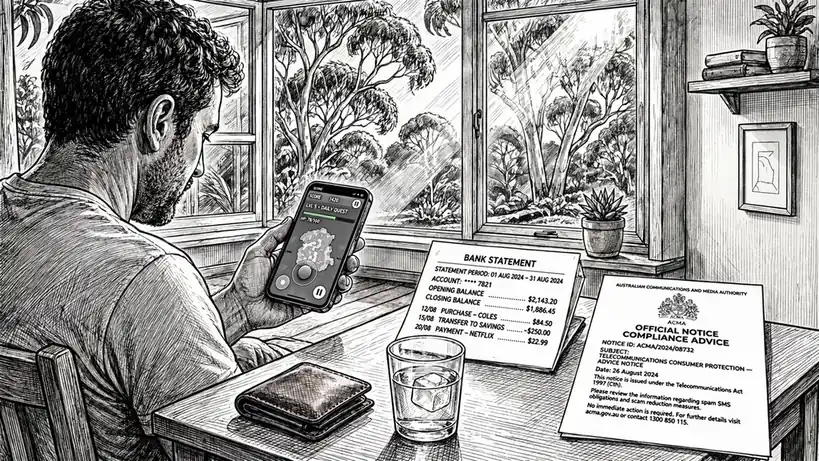
The Australian Communications and Media Authority can investigate illegal offshore gambling sites and request that internet service providers block them. That power says something important about the relationship between the website and Australia: an offshore operator may be reachable until action is taken, but reachability is not domestic approval.
The law does not make it illegal for an individual Australian to play at an offshore casino, and Australians are not prosecuted simply because the provider is offshore. The practical risk remains with the player, however, because the activity is not supervised by an Australian regulator. Disputes, account restrictions, identity checks and withheld balances are therefore not matters handled through an Australian casino licensing system.
That is a colder arrangement than the bright language of “new casino table games” suggests. New software can appear quickly. Local accountability does not arrive with it.
Reading claims without inventing protection
A foreign operator may describe its table games as licensed, audited or secure. Such claims refer to the operator’s own jurisdiction or to materials associated with the platform; they do not create an Australian licence. There is no public Australian register of online casino licensees to consult because no domestic casino licence exists for this product.
The Australian Gambling Research Centre recommends choosing games with RTP (Return to Player) above 96%, according to a specialist industry review. That is a reference point about game selection, not evidence that a platform is legal in Australia, and not a promise of an individual result. Regulation and mathematics answer different questions: one concerns who may provide the service, the other concerns how a game is designed to return money over time.
Legal Reality Online casino services are prohibited for Australian residents under the Interactive Gambling Act 2001. While offshore sites may be accessible, they operate without Australian regulatory supervision.
This distinction also prevents a common category error. A table game can be physically offered in a regulated Australian casino, mathematically described through RTP or house-edge information, and displayed online by an offshore provider. Those three statements do not merge into one legal permission.
For Australian residents, the lawful line is therefore stark. Casino table games may exist in state- or territory-regulated physical casinos. Companies may not offer online casino services to Australians under the Interactive Gambling Act 2001. Offshore play is not an Australian-approved alternative, even where the player is not committing a crime by participating. It remains outside local supervision and at the player’s own risk.
The table may look familiar. The jurisdiction is not.
The Table Games Found Online—and the People Behind the Deal
The online table is less a single game than a small theatre of recognisable forms. Blackjack, baccarat, roulette and poker sit beside live dealer tables, where a camera, a host and a stream of cards turn software into something that resembles a room with people in it. The resemblance is deliberate. Gambling has always borrowed atmosphere from elsewhere: the green baize, the polished shoe, the measured pause before a card is turned.
That makes the choice of table more than a question of rules. It is also a choice about pace, visibility and company.
Blackjack: the conversation at the table
Blackjack is often the most immediately legible game in an online lobby. The objective is clear, the dealing is quick, and the familiar vocabulary—hit, stand, split, double—gives the player a role beyond merely watching numbers move. In a live dealer version, the dealer deals from a physical table while the platform displays cards, betting controls and the remaining time for decisions.

The human dealer matters here because blackjack is built around small pauses. A hand is not only a sequence of symbols; it is the dealer’s announcement, the turn of a card, the quiet recognition that someone has stayed while another player has taken one more. Digital blackjack can be brisk and solitary. Live blackjack restores a little ceremony.
A profile review of live-dealer platforms records Australian-dollar live blackjack limits from $1 to $5,000 per hand, depending on table tier. That detail describes the reviewed offering, not a universal market rule. Table tiers can divide players by pace, presentation and stake range, while the underlying game remains recognisable.
Roulette: spectacle in a circle
Roulette offers a different kind of attention. Blackjack asks for decisions; roulette creates suspense through the wheel, the ball and the gradual narrowing of possibilities. Online versions present a compact betting layout, while live dealer tables add the physical wheel and the dealer’s movements.
The game is visually generous. Even someone who has no interest in the table’s arithmetic can understand the attraction of a ball circling a wheel before settling into a numbered pocket. That theatrical element explains why roulette appears so prominently in casino lobbies and live-dealer schedules. It is easy to watch, easy to enter and easy to recognise.
Live roulette also demonstrates how platforms arrange the human presence. The dealer may speak continuously, or the interface may leave the wheel to carry the performance. The best experience is not necessarily the loudest one. Some rooms feel like television; others feel like a quiet table observed through a window.
Baccarat: restraint as a feature
Baccarat is often presented with less instructional clutter than blackjack. Bets are placed on the player, the banker or a tie, and the dealing follows a set structure. That limited decision-making gives the game a composed quality. The player is not required to direct every card, and the table can feel more ceremonial than conversational.
A fast-paced game involving player decisions like hit, stand, or double.
A game of suspense revolving around a spinning wheel and a ball.
A ceremonial game with a structured rhythm of betting on player, banker, or tie.
A social competition where players often play against each other rather than the house.
In a live setting, baccarat benefits from the dealer’s steady rhythm. Cards are drawn, compared and arranged with a formality that has survived the transition from private rooms to streaming interfaces. Online baccarat may therefore appeal to people who want table-game atmosphere without a long list of choices.
A platform’s presentation still changes the experience. A compact digital table emphasises speed and clarity. A live room emphasises the dealer, the cards and the social impression of sitting among other players, even when everyone is physically elsewhere.
Poker: a family of tables, not one table
Poker belongs in the same online catalogue, but it does not behave like blackjack, roulette or baccarat. In many casino settings, the player competes against other players rather than simply taking a position against the house. That changes the emotional centre of the game. Attention moves from the dealer’s procedure to the people making decisions around the table.
Online poker rooms can display avatars, usernames, timers and betting histories. These small signals create a social landscape from very little material. A pause may suggest uncertainty; a sudden raise may invite interpretation. The interface cannot provide a face for every thought, so players read timing and pattern instead.
Australian companies are prohibited from offering online poker to Australian residents. Descriptive coverage of poker formats should not blur that distinction or turn a familiar game into an invitation to play through an online service.
Pai Gow Poker and the pleasure of a hybrid
Pai Gow Poker deserves a separate mention because its identity is not exhausted by the word “poker”. It combines poker hands with a two-hand arrangement, asking players to divide their cards into a higher hand and a lower hand. That split gives the game a different rhythm from conventional poker and a different feel from blackjack.
The dealer’s role becomes especially visible in a game built around comparison and arrangement. Cards are not merely revealed; they are organised into hands whose relationship determines the result. The format has the quiet complexity of a puzzle, though the table itself remains social and recognisable.
Pai Gow Poker is therefore easy to overlook in a broad list of online table games and difficult to replace once its structure becomes familiar. It occupies its own corner.
The dealer as the platform’s human face
Live dealer rooms depend on people in a way that automated tables do not. The dealer introduces the round, handles the cards or wheel, marks the end of betting and maintains the rhythm of the session. Behind that visible figure sits a larger production: cameras, table equipment, game interfaces and staff keeping the broadcast coherent.
A single provider is described as the dominant live-dealer supplier in one industry overview, with roulette, blackjack, baccarat and game shows among its offerings. That is a source-specific market assessment, not a permanent law of the industry. Other providers and platform arrangements exist, but the point remains: much of the apparent variety in a lobby may come from a limited number of production systems.
At the player-facing level, the differences are felt through camera angles, interface design, dealer manner and table organisation. The cards may be familiar. The room is the product.
From Casino Near Me to Live Dealer: Where Opening Hours Still Matter
A search for a casino with table games nearby is rarely just about gambling. It is a small piece of geography: how far the building sits from home, whether public transport still runs, whether dinner can be folded into the evening, and whether the doors will be open when the mood arrives. “Casino near me” sounds casual. In practice, it asks a stubbornly local question.
Physical vs. Online Land-based casinos are regulated by specific state or territory authorities, whereas online live-dealer services are provided by offshore operators outside the Australian licensing framework.
In Australia, physical casinos occupy a different position from online live-dealer rooms. Land-based table games are regulated by the relevant state or territory authority, so the casino belongs to a visible place and a defined local system. Its doors, gaming floor and staff exist within that jurisdiction. A venue in Sydney is not interchangeable with one in Melbourne merely because both offer roulette or blackjack. The city is part of the experience, and the regulator is part of the background.
That is why location-based searches still matter. The closest casino with table games may be the only practical option for someone who wants the physical setting: the entrance, the noise of chips, the pause between hands, and the dealer working across an actual felt table. Distance determines whether the outing feels deliberate or absurdly elaborate. A venue near a city centre may be easy to reach but busy at popular times; one farther away may require more planning. These are access questions, not mathematical ones.
The physical table has a timetable
Casino opening hours do not automatically answer the narrower question: when do table games open? A building may admit visitors while particular tables begin later, close earlier, or operate according to demand. The gaming floor can therefore have its own rhythm inside the wider venue schedule. A restaurant may be serving while a roulette table remains closed. A blackjack table may be active while another section waits for players.
The reliable detail is the venue’s current timetable for its gaming floor and individual table areas. That distinction matters because broad opening hours can create a false sense of certainty. “Open” may describe the building, not every game inside it.
Physical play also carries the minor rituals that online access removes. There is travel, identification at the entrance, a decision about how long to stay, and the practical limit imposed by the last train home. Even the closest casino with table games near a person’s location can be inconvenient if the journey back is poor. Casinos are buildings, not browser tabs. Buildings have closing times.
The same logic applies to searches for casinos around a particular city. Someone looking for a venue near New York City, Ohio, Ho Chi Minh City, or any other location is asking for a local comparison, not an Australian answer. An overseas casino’s table-game schedule says nothing about what is available to an Australian resident. Geography does not dissolve regulation; it merely makes the difference more visible.
Live dealer rooms remove the commute, not the clock
Live dealer rooms offer a different setting. The table is presented through a digital interface, while a human dealer conducts the action from a studio. The physical journey disappears, but time does not. A live table can have scheduled availability, assigned operating periods, table closure rules, and limits on when a session can be joined. The room may feel continuous on screen while still being organised by a real production timetable.
This is the appeal of the format: it preserves some social texture without requiring a trip across town. A dealer greets the table, handles the cards or wheel, and provides a point of human attention that automated play lacks. The screen becomes a small theatrical stage. Less velvet, more bandwidth.
Major Live-Dealer Providers Many live-dealer experiences are powered by a limited number of specialized production systems, such as Evolution, which provide the software, cameras, and dealer interfaces for various games.
A provider profile describes Evolution as the dominant live-dealer provider, with roulette, blackjack, baccarat and game shows among its offerings. That describes a provider’s reach, not Australian approval. No Australian regulator supervises offshore online casino rooms, and an offshore operator may select the rules under which its online tables run. The setting can resemble a regulated casino while lacking the local oversight attached to a physical Australian venue.
One operator listing identifies live-dealer blackjack and roulette at Retro33 Casino. That is an example of what a particular offshore platform presents, not evidence that Australian residents have access to a domestically licensed online casino. The distinction is easy to lose when a digital table looks polished. Appearance is not jurisdiction.
What “best” means when access is the real issue
The phrase “best online live casino table games” often smuggles in a comparison about odds, bonuses or platform quality. Those are separate questions. For access, the useful distinction is simpler: physical tables depend on place and venue hours; live-dealer rooms depend on internet access and the provider’s schedule. Neither setting should be treated as a promise of constant availability.
The same caution applies to “no-deposit” offers attached to table games. A promotion may be visible beside a live table without changing the legal status of the service or removing its conditions. Bonus terms can include wagering requirements, game restrictions, withdrawal limits, expiry periods and maximum bets. Those details belong to the offer, not to the architecture of the room.
For Australian residents, an offshore live-dealer room is not supervised by an Australian regulator, and playing there is undertaken at the player’s own risk. A physical casino’s local setting does not transfer to an offshore website simply because the online dealer speaks English or the stake is displayed in Australian dollars.
The old “casino near me” question therefore has two answers. One points to a building, a jurisdiction and a timetable. The other points to a remote room that may imitate the atmosphere while operating outside Australian oversight. Distance has vanished. The legal and practical differences have not.
The House Always Has a Number: Odds, RTP, and Bonus Fine Print
“Best odds” sounds like a simple shopping question. It is not. A table game can have a low house edge under one set of rules and a noticeably different edge under another. A promotion can look generous while contributing little to the balance of a live table wager. The number matters, but so does the sentence printed beside it.
House edge is the part the table keeps
The house edge is the casino’s mathematical advantage over the long run. If a game carries a house edge of 0.5%, the arithmetic does not mean that every session loses half a percent. Short sessions can produce wins, losses, or nothing particularly dramatic. The percentage describes the expected margin across a very large number of comparable wagers.
That distinction is important when comparing the best odds at casino table games. Blackjack is often near the favourable end when played with basic strategy. The available evidence places the house edge for basic-strategy blackjack below 0.5%. That is a statement about the game under the relevant rules and strategy, not a promise attached to every blackjack table.
Rules change the calculation. The number of decks, whether the dealer hits or stands on a soft seventeen, doubling restrictions, splitting rules, surrender options, and side bets can all affect the result. A side bet may be displayed next to a low-edge main game while carrying a very different mathematical price. The felt is not a single number.
Roulette demonstrates the other side of the comparison. Its pockets and payout structure determine the edge, while the player’s choice of red, black, a single number, or another layout changes the shape of the risk without removing the house advantage. “Best odds in casino table games” therefore requires a rule sheet, not just a game title.
Checking the Odds
- Verify the specific house edge for the exact game rules being played
- Confirm the Return to Player (RTP) percentage is clearly displayed
- Read the fine print regarding side bets and their mathematical costs
- Check if the table rules (e.g., dealer hitting on soft 17) affect the edge
RTP is related, but not identical
RTP, or Return to Player, expresses the long-run amount a game is designed to return against the amount wagered. A higher RTP corresponds to a lower theoretical house edge, since the two figures describe opposite sides of the same arithmetic. Neither figure predicts the result of one hand, spin, or evening.
An industry-body recommendation cited in the available material places the useful threshold above 96% RTP when comparing games. That is a benchmark for reading information, not a guarantee of profit. A separate review of platforms reported an average RTP of 97.1%, but that figure belongs to that review’s sample and methodology. It should not be mistaken for a universal market baseline or for the return of every table game on every platform.
This is where promotional language becomes slippery. “High RTP” may refer to a particular game version, a particular rule set, or a figure supplied by the operator. The displayed RTP should be identifiable before money is placed. A platform that does not show the game’s RTP does not provide enough information for a meaningful comparison.
Promotions have their own mathematics
The best online casino promotions for table games are not necessarily the offers with the largest headline value. Their practical worth depends on the conditions attached to the bonus balance and on how table-game wagers count toward wagering.
A source reviewing live-casino promotions reports that live dealer wagering contribution may be limited to 10% or excluded entirely from bonus wagering. That is a source-specific observation, not a rule applying to every offer. The wording of each promotion controls the calculation.
The fine print deserves a separate reading for:
- wagering requirements and the games or bets that count towards them;
- withdrawal limits attached to bonus funds or winnings;
- restrictions on particular table games, bet types, or live dealer tables;
- expiry periods for the bonus or the resulting balance;
- maximum bets allowed while a bonus is active.
A low house edge does not rescue a promotion that gives little credit for the qualifying wager. Nor does a large bonus improve a game whose rules carry an unattractive margin. Game mathematics and promotional mathematics occupy the same account, but they are not the same thing.
The appeal—and uncertainty—of crypto claims
Searches for the best Bitcoin casino table games often combine two separate questions: the game’s odds and the payment method’s speed. Bitcoin does not make blackjack mathematically better, and it does not alter the house edge printed in the game rules.
One reviewed source states that cryptocurrency withdrawals can be processed within one hour on the platforms it examined. That is a claim about selected platform performance, not a guaranteed timetable. It also says nothing about verification, account review, network conditions, or whether a withdrawal is approved in the first place. The payment rail cannot compensate for unclear rules or missing RTP information.
The same caution applies to claims about AUD withdrawals through e-wallets being processed within 24 hours on top-ranked platforms. Such statements describe a source’s assessed platforms, not a universal service standard. Speed is a service feature; odds remain a property of the game.
The cleanest comparison separates the columns: house edge, displayed RTP, table rules, bonus contribution, and withdrawal conditions. A promotional badge cannot turn an unfavourable number into a favourable one. Nor can a low-edge game make an offshore online service Australian-supervised. The arithmetic remains precise. The surrounding promises rarely are.
Essential Summary
- Physical casinos are locally regulated, while online services are often offshore and unsupervised.
- Game mathematics (RTP and house edge) are distinct from the legal status of a platform.
- Promotional bonuses often come with strict wagering requirements that affect live table games.
- Payment speeds, such as crypto withdrawals, are service features and do not change the underlying game odds.
Who Runs the Table When the Dealer Is Not the Story?
A table game looks simple from the player’s side: cards, chips, a wheel, a decision. Behind it sits a small bureaucracy of people and software. The dealer occupies the visible role, while supervisors, surveillance teams, cashiers, and compliance staff keep the table connected to the wider casino.
In an Australian land-based casino, that machinery operates under state or territory regulation. The separation matters. Australia has no single gambling authority governing every table, so the relevant jurisdiction sets the rules for supervision, record-keeping, staff conduct, and incident handling. A dealer is therefore not merely a performer delivering cards. The dealer is part of a controlled process in which procedures must be consistent and observable.
What management software actually manages
Casino table-games management software links the felt to the back office. It can record table activity, monitor open and closed tables, track chip movements, support surveillance reviews, and provide managers with an operational view of the floor. The software does not replace the dealer’s judgement in the moment; it creates an audit trail around that judgement.
That distinction becomes especially clear with live dealer tables. A streamed room may show a dealer dealing roulette, blackjack, or baccarat, but the platform also needs systems for table status, player records, game integrity, and escalation when something interrupts the session. A specialist industry overview identifies Evolution as the dominant live-dealer provider, with roulette, blackjack, baccarat, and game shows among its offerings. That describes a provider’s market position, not Australian regulatory approval.
The offshore setting changes the accountability chain. An overseas platform may present polished supervision and detailed dashboards, yet no Australian regulator monitors its operations. Its staff work within the operator’s own controls and the rules attached to its offshore licence, if it has one. Presentation can look official. Oversight is another matter.
The dealer’s job is skilled, and oddly exposed
Dealer pay is shaped by the employer, jurisdiction, experience, shifts, and the division between base wages and gratuities. No reliable salary figure belongs here without a verified employment source. What can be said is less theatrical: dealing demands accuracy, composure, procedural discipline, and the ability to manage a room without becoming its main character.
The table is a workplace before it is a stage. That is the part the camera leaves out.
Reading a House-Edge Chart Without Mistaking It for a Promise
A casino table games house-edge chart looks authoritative because it compresses complicated mathematics into tidy percentages. Its real use is narrower: comparison. It does not predict the result of an individual hand, spin, or shoe, and it cannot turn an unfavourable rule set into a favourable one.
The house edge is the casino’s mathematical advantage under stated conditions. A smaller margin means less theoretical loss over a very large number of plays, not a promise attached to the next decision. Short sessions remain governed by chance. The chart is a map, not a weather forecast.
What the columns are really saying
A useful table-game comparison should identify the game, the applicable rules, and the assumptions behind the figure. Blackjack is the clearest example. A house edge below 0.5% is associated with basic strategy, but that result depends on the table rules and accurate decisions. Change the rules, or abandon the strategy, and the displayed margin no longer describes the same game.
Roulette needs the same caution. A figure without the wheel type is incomplete, because the available pockets affect the mathematical margin. Baccarat figures also depend on which bet is being measured; the player, banker, and tie wagers are not interchangeable. One line labelled simply “baccarat” conceals more than it reveals.
House Edge The mathematical advantage the casino holds over the player in the long run.
RTP (Return to Player) is related but not identical language. It describes the theoretical amount returned across a large sample, while house edge expresses the corresponding casino advantage. A specialist industry review citing an RTP threshold above 96% offers a comparison point, not a guarantee for a particular table or session. Another industry review reports a 97.1% average across reviewed platforms; that is a review sample, not a universal market measure.
Rules still sit above the chart: payouts, drawing procedures, side bets, and strategy assumptions. The neatest percentage is worthless if its conditions are missing. Numbers require footnotes. Always.
Free Table Games Without a Download: A Different Kind of Play
A browser can open a table-game demo without asking for an installation. That small convenience matters: a phone, tablet, or computer becomes the window, while the game remains a temporary piece of software running in the page. No download is required, and no separate casino application has to take up space on the device.
The word free changes the legal and practical character of the experience. A demo table accepts no real-money stake. It cannot turn a wager into a win, and its displayed balance is not cash waiting to be withdrawn. Free-play table games are described as outside the Interactive Gambling Act prohibition for that reason. They are simulations, not a route around the rules governing online casino services.
The familiar formats are easy to recognise. A browser demo may present blackjack, baccarat, roulette, or poker, with buttons that imitate betting and dealing. The interface can still show cards, chips, wheel spins, and changing balances. What it does not show is a financial transaction. The drama survives; the money does not.
That distinction is especially important when a page places demo tables beside real-money products. Similar graphics do not mean similar status. A free roulette screen and a cash gambling service may look like siblings, but they perform different social jobs: one rehearses a game, the other handles a stake. The resemblance is visual, not legal.
No-download access also has a modest cultural appeal. It removes ceremony. There is no account installation, no software library to maintain, and no claim that a particular table will remain available forever. A demo may be removed, altered, or limited by the site presenting it. Free-play access is therefore a convenience, not a permanent entitlement.
For players, the cleanest reading is simple: browser-based practice can show how a table works, but it cannot create real-money access. The chips are theatre. The screen knows the difference.
Bitcoin Table Games Versus Ordinary Casino Payments
Bitcoin-funded table games are sometimes presented as a technical alternative to ordinary casino payments: a wallet replaces a card, and a blockchain transaction replaces a bank transfer. That distinction matters operationally, but it does not change the legal position of online casino play in Australia. Neither payment route turns an offshore table-game service into an Australian-approved product. Any such service remains outside Australian regulatory supervision, with the player carrying the risk when an account is delayed, restricted, or closed.
Cryptocurrency’s attraction is speed. A specialist gambling review reports that crypto withdrawals at fast-payout platforms can be completed in 30 minutes to two hours. That is a statement about the platforms covered by that review, not a market-wide promise. The actual process can still involve identity checks, wallet screening, network congestion, exchange controls, or a manual account review. KYC verification—such as a driver’s licence, passport, and proof of address—is required before a withdrawal request.
Withdrawal Risks Attention Cryptocurrency and e-wallet transfers are subject to network speeds, exchange controls, and mandatory KYC verification processes like identity and address checks.
Conventional methods create different frictions. A card deposit may be treated by a bank as a cash advance, producing charges separate from anything shown by the gambling service. Bank transfers can be slower, while e-wallets may involve a service fee for withdrawals. Prepaid vouchers load quickly but can make withdrawing funds more difficult. The payment rail is therefore part of the risk assessment, not merely a button on a cashier page.
Bitcoin also changes reversibility. A card transaction may be disputed through a bank, subject to the bank’s rules; a cryptocurrency transfer normally cannot simply be recalled after confirmation. Price movement adds another uncertainty between deposit and withdrawal. Fast does not mean protected.
The comparison is thus less “bitcoin versus normal casino table games” than payment infrastructure versus payment infrastructure. The table, dealer, and advertised limits may look familiar. The safeguards do not.
Why Pai Gow Poker Keeps Its Own Place at the Table
Pai Gow Poker deserves a separate place in any account of casino table games because it is not simply poker with a different name. Its structure borrows from several traditions at once: the card-ranking language of poker, the two-hand arrangement associated with Chinese domino games, and the measured pace of a table where decisions are made by comparison rather than by chasing a single winning combination.
The central distinction is the split hand. A player receives seven cards and arranges them into a five-card hand and a two-card hand. Both must compete with the dealer’s corresponding hands, and the arrangement creates the game’s particular tension: a strong five-card hand can be weakened if the smaller hand is neglected. That balancing act is absent from ordinary blackjack and gives Pai Gow Poker its own rhythm.
It is also different from conventional poker because the table is not primarily a contest among players. The dealer remains the reference point, while the player’s task is to construct two hands within the rules. There is no familiar cycle of raising, folding, and reading opponents. The drama is quieter. More geometry than theatre.
A casino table-games catalogue may place Pai Gow Poker beside blackjack, baccarat, roulette, and poker, yet the label does not make these formats interchangeable. Pai Gow Poker asks for attention to hand hierarchy and arrangement, not merely recognition of card values. That is why it can appeal to players who find blackjack too linear or poker too adversarial.

For Australians, any online appearance of the game should be read as an offshore offering rather than an Australian-regulated casino product. Offshore sites are not on a licensed Australian footing, and their presence does not create local approval or supervision. The game’s distinctive design remains worth understanding. Its regulatory status does not change with the cards.
Table Games in Canadian Casinos: A Useful Comparison, Not an Australian Licence
Canadian casinos offer a useful point of comparison because their table-game setting is shaped by a different regulatory arrangement. A casino in Canada may present blackjack, roulette, baccarat, poker variants, and other live tables within a domestic venue, with the surrounding rules determined by the relevant province or territory. The important detail is not the exotic label on the felt. It is the jurisdiction behind the room.
That distinction helps explain why a Canadian casino cannot be treated as evidence that the same online service is available to Australians. A physical casino operating under Canadian authority belongs to the Canadian gambling environment. Its licence, controls, staff, and premises do not travel across the Pacific merely because the website is accessible from an Australian connection.
The comparison is still revealing. Canadian casino floors tend to make gambling visible as a public institution: a building, a managed room, a dealer, surveillance, and a local regulator somewhere behind the operation. Australia has a similarly state-based approach for land-based casinos. Australian land-based casino table games are regulated by separate state or territory regulators, rather than by one national casino authority. The map matters.
Online presentation can blur that map. A site may display Canadian imagery, list familiar table games, or describe its service in language that sounds reassuringly local. None of those details creates an Australian casino licence. Offshore sites are not on a licensed Australian footing, and their presence online should not be mistaken for domestic approval.
So Canadian table games are best read as a comparison of gambling environments, not a route around Australian law. The table may look familiar; the legal ground beneath it is not. A foreign casino remains foreign.
What payment methods work at real online casino Australia sites?
Common options include cards, e-wallets, bank transfers, prepaid vouchers and cryptocurrency. E-wallets and crypto can be faster, bank transfers usually cost less, while card deposits may be treated as cash advances and prepaid vouchers can make withdrawals harder.
Can people in Australia play at Retro33 Casino?
Yes, Australians can access offshore casinos such as Retro33, and individuals are not prosecuted for playing there. However, Retro33 is not licensed or supervised in Australia, and its listed features include Australian-dollar deposits, an age requirement of 18, blackjack and roulette tables, and responsible-gambling tools.
How to apply for an interactive gambling licence?
You cannot obtain an Australian licence to offer online casino services to Australian residents, because the Interactive Gambling Act 2001 prohibits companies from providing them. Land-based casino licensing is handled separately by the relevant state or territory regulator.
What are the rules around payouts and licensing?
Offshore operators may hold a foreign licence, but that does not make them Australian-licensed or locally supervised. KYC is required before a first withdrawal, and payout speed depends on the method: e-wallets and cryptocurrency are generally faster than bank transfers or cards.
What are the legal grounds for refusing withdrawals?
A withdrawal may be affected by identity verification requirements, and offshore operators can impose their own account and payment rules because Australian regulators do not supervise them. Australians therefore do not have the protection of an Australian casino licensing system when a balance is restricted or withheld.
What are the emerging risks in online gambling?
Key risks include offshore operators without Australian oversight, blocked sites, payment disputes, account restrictions and withheld balances. Card deposits may also incur cash-advance charges, while responsible-gambling protections vary between operators.
Prepared by the Casino Info Au editorial staff.