
Anonymous Crypto Casinos in Australia: What to Know
 Available in US
Understand the limits of anonymous play, crypto bonuses, withdrawals and wallet privacy in the Australian market.

Table of Contents
- What “Anonymous” Really Means in Australian Crypto Casinos
- Bitcoin Casinos, No-Deposit Offers, and the Cost of Crypto Bonuses
- Anonymous Bitcoin Casinos: Convenience Without the Banking Layer
- Choosing an Anonymous Crypto Casino Without Mistaking Privacy for Legitimacy
- The 2024 Anonymous-Casino Search, Reconsidered for 2026
- No-Deposit Crypto Bonuses: What the Small Print Controls
- How Fast Can an Anonymous Bitcoin Withdrawal Arrive?
- Anonymous Cryptocurrency Casinos and the Stablecoin Question
- What Makes a Bitcoin Casino the Better Anonymous Option?
- Bitcoin Casino Payments: The Wallet Risks Privacy Claims Leave Out
What “Anonymous” Really Means in Australian Crypto Casinos
“Anonymous” is a persuasive word in gambling because it appears to promise an escape from paperwork, bank statements and the social discomfort attached to a gambling transaction. In practice, an anonymous crypto casino is rarely anonymous in the strict sense. The phrase usually describes a reduced dependence on traditional banking or an account that can be opened with limited personal information. Those are different things from playing without an identifiable trail.
The distinction matters particularly in Australia, where the legal position is less accommodating than the advertising language. Online casino games are prohibited interactive gambling services when offered to Australian customers under the Interactive Gambling Act 2001. That includes online pokies, roulette, blackjack and live-dealer tables. No domestically licensed real-money online casino exists for Australian players, and no Australian gambling licence authorises casino games for this market. Australian licences apply to permitted products such as sports and race wagering, not to an online casino site offering table games or slots.
The law targets the provider rather than the player. An Australian who places a bet at an offshore site is not committing a crime under that framework, but this does not turn an offshore operator into a legal Australian casino. Nor does a foreign licence authorise service to Australian customers. A Malta or Curaçao licence may describe the operator’s position in another jurisdiction; it does not create an Australian casino licence that does not exist.
This shortlist is a practical starting point for exploring anonymous crypto casinos available to Australian players in 2026. Use each verdict to quickly assess the operator’s stated licensing, bonuses, deposits, and payout details.
License: Curacao eGaming Licence · Min. deposit: A$20 Skycrown Casino operates under a Curacao eGaming Licence and has a minimum deposit of A$20. It is a straightforward option for readers prioritising clear basic account and deposit information.
License: Curacao eGaming Licence · Min. deposit: A$10 PlayWest holds a Curacao eGaming Licence and accepts deposits from A$10. Its stated entry point makes it accessible for players looking to start with a smaller deposit.
Bonus: up to A$750 + 50 jackpot spins, 35x wagering · Payout speed: crypto ~90 minutes, fiat 1-5 days · Min. deposit: A$30 Kingmaker features a bonus of up to A$750 plus 50 jackpot spins, with 35x wagering. Crypto payouts are listed at around 90 minutes, while fiat payouts take 1–5 days, and the minimum deposit is A$30.
License: Curacao (operating since 2017) · Bonus: 250% up to A$2,000 + 50 free spins on the first of six deposits · Min. deposit: A$20 Uptown Pokies has operated under Curacao licensing since 2017. Its welcome offer is 250% up to A$2,000 plus 50 free spins on the first of six deposits, with a A$20 minimum deposit.
License: Curacao · Bonus: up to A$10,000 multi-stage + 500 free spins · Min. deposit: A$20 (POLi) Lucky Dreams offers a multi-stage bonus of up to A$10,000 and 500 free spins. It operates under Curacao licensing, with a A$20 minimum deposit via POLi.
License: Curacao eGaming (Roby Games Ltd) · Bonus: 100% up to A$750 + 200 free spins Roby Casino operates under Curacao eGaming through Roby Games Ltd. Its listed promotion is 100% up to A$750 plus 200 free spins.
License: Curacao · Bonus: 100% up to A$500 + 200 free spins, 10x wagering · Payout speed: crypto 30-60 minutes, fiat 1-5 days · Min. deposit: A$10 Wild Tokyo is Curacao-licensed and offers 100% up to A$500 plus 200 free spins with 10x wagering. The minimum deposit is A$10, while crypto payouts are listed at 30–60 minutes and fiat payouts at 1–5 days.
License: Curacao eGaming OGL/2024/923/0383 (Antillephone N.V.) · Bonus: up to A$2,000 + 100 free spins across 2 deposits · Min. deposit: A$30 WinSpirit Casino holds Curacao eGaming licence OGL/2024/923/0383, issued by Antillephone N.V. Its offer reaches A$2,000 plus 100 free spins across two deposits, with a A$30 minimum deposit.
License: Curacao · Bonus: up to A$2,000 Golden Pokies operates under Curacao licensing and advertises a bonus of up to A$2,000. These are the main stated details available for assessing its position in this shortlist.
Bonus: up to A$7,500 + 550 free spins across 10 deposits, 50x wagering · Payout speed: crypto under 1 hour, PayID 1-3 business days · Min. deposit: A$20 (A$30 to qualify for the bonus) Ricky Casino offers up to A$7,500 plus 550 free spins across 10 deposits, with 50x wagering; A$30 is required to qualify for the bonus. Crypto payouts are listed as taking under an hour, PayID payouts 1–3 business days, and the minimum deposit is A$20.
That legal gap gives privacy marketing extra room to breathe. The crypto casino Australia market contains a higher concentration of unlicensed or lightly regulated platforms than the fiat casino market. A site may therefore use “anonymous casino” to suggest independence from banks, minimal registration or a wallet-based deposit process, while leaving the legal status of its gambling service unresolved. The label is commercial shorthand, not a legal category.
Pseudonymous is not invisible
Cryptocurrency changes the name attached to a payment, not the existence of the payment. A blockchain transaction is recorded permanently on a public and traceable ledger. Wallet addresses are not necessarily real names, but they are persistent identifiers. Once an address becomes connected with an exchange account, a withdrawal request, a message, or another identifiable transaction, the supposed anonymity can become much thinner.
That is why an anonymous BTC casino should be understood cautiously. Bitcoin may allow a deposit without a bank card or direct bank transfer, yet the transaction still leaves a public record. The same principle applies when a platform presents itself as a crypto casino anonymous to financial institutions: the absence of a bank statement is not the absence of evidence. It is simply a different form of evidence.
An anonymous online casino may also collect information inside its own systems. Registration details, device data, account activity, wallet addresses and communications can all create a profile, even when a passport is not requested at the beginning. “No identity check at sign-up” is therefore a narrower claim than “no identity record exists”. The first may describe an account-opening procedure. The second would be much harder to establish.

When identity checks return
Most licensed crypto casino platforms require identity verification before processing significant withdrawals. The apparent privacy of the deposit stage can disappear when funds are requested back. This is not a contradiction in the technical sense: the operator may permit an initial wallet transaction while reserving the right to establish the customer’s identity before releasing a larger withdrawal.
The KYC process at a crypto casino includes passport verification, proof of address and payment-method verification. The purpose is to connect the person, the account and the source or destination of funds. It can also expose the limits of the word “anonymous” in a way that promotional copy tends to postpone until the least convenient moment.
A platform that asks for documents only at withdrawal is not necessarily proving that its controls are sound. It is proving that the account has reached a point at which its internal rules require more information. Conversely, a platform claiming never to ask for identity documents is not automatically safer or more private. It may simply be operating with weaker oversight. Privacy and legitimacy are separate questions.
This is the awkward centre of the anonymous crypto casino idea: the features that reduce friction can also reduce accountability. A lightly regulated anonymous casino site may offer fewer formal checks, but the customer may have fewer practical avenues when an account is closed, a payment is disputed or a withdrawal is delayed. A document request can feel intrusive. The absence of one can be more consequential.
Legal Reality In Australia, online casino games are prohibited interactive gambling services under the Interactive Gambling Act 2001. An offshore licence does not grant legal authority to operate in the Australian market.
The Australian meaning of “anonymous”
For an Australian reader, “anonymous casino online” should therefore be read as a description of payment architecture and account policy, not as permission, protection or guaranteed secrecy. It may mean that cryptocurrency is accepted, that a bank is not involved in the deposit, or that identity checks are not immediate. It does not erase the public blockchain, create an Australian casino licence or remove the operator’s ability to request KYC evidence.
That is also why claims about the “best anonymous casino” are unstable before any comparison begins. A platform can look private because it asks for little information, while remaining opaque about ownership, jurisdiction and dispute handling. Another can require identification and still protect account data more responsibly. The visible amount of paperwork is not a reliable measure of either privacy or trust.
The cleanest definition is the least glamorous one: crypto gambling may be pseudonymous, partially private and less connected to banking, but it is not automatically identity-free. In Australia, the legal prohibition on online casino services remains the first fact in the room, even when the website’s advertising prefers to whisper about freedom.
Privacy is not immunity.
Bitcoin Casinos, No-Deposit Offers, and the Cost of Crypto Bonuses
A crypto welcome offer is rarely just a larger version of a fiat promotion. It is a different commercial proposition, built around a different deposit method and often expressed in a different currency. That distinction matters when a platform advertises a no-deposit bonus, a Bitcoin match, or an apparently generous offer for new players.

One comparison reported by oceanroadmagazine.com.au describes a standard Australian-dollar welcome offer at the same platform as 100% up to A$750, while its crypto alternative was presented as 200% up to $3,000 USDT. Those figures are an example from that source, not a market-wide tariff. Still, the contrast explains the appeal of anonymous Bitcoin casinos with no-deposit bonus language: the crypto headline can look substantially more generous before the conditions are read.
The headline is the cheap part.
Fiat and crypto offers are not interchangeable
A fiat bonus is normally displayed in the currency used for the cash deposit. A crypto promotion may instead be denominated in Bitcoin, USDT, or another supported asset. That creates a second layer of interpretation. The value shown at the moment of registration may not have the same practical value when the balance is used, converted, or withdrawn.
Bitcoin and Ethereum balances can change in value while play continues, independently of whether the gambling result is positive or negative. The point is easy to miss because the casino balance may show a number of coins rather than an Australian-dollar equivalent. A player can therefore experience a change in purchasing value without placing another wager.
The source cited above illustrates the exposure with a 10% Bitcoin price drop: a deposit’s AUD value can fall by 10% before gambling has produced any result. That is not a wagering loss. It is currency risk attached to the bonus environment.
USDT changes that particular calculation because it is a stablecoin designed to maintain a value of one US dollar. It does not make a promotion simple, safe, or withdrawable on demand; it removes the same type of price exposure from the deposit and withdrawal balance. The small print remains.
Crypto Welcome Offer Example 200% up to $3,000 USDT
Fiat Welcome Offer Example 100% up to A$750
Key Difference Denomination and currency volatility
What “no deposit” can conceal
A no-deposit offer sounds like money placed on the table without payment. In practice, it is promotional credit with rules attached. The important question is not merely whether a deposit is required to activate the offer. It is whether the resulting balance can be withdrawn, and under what conditions.
Crypto bonuses may carry the same wagering multiplier as a fiat bonus, or a different one. The available facts do not establish a universal multiplier for either category. What is established is the central restriction: withdrawals remain locked until the required wagering threshold has been met.
That condition changes the meaning of “real money”. A balance may appear in an account and may be usable for play, yet remain unavailable as cash. The distinction is commercial rather than philosophical. Displayed funds are not necessarily withdrawable funds.
A no-deposit Bitcoin promotion can therefore involve several separate gates:
- registration or account activation;
- compliance with the promotion’s eligibility terms;
- completion of the stated wagering requirement;
- observance of any game or contribution restrictions set by the offer;
- satisfaction of the casino’s withdrawal conditions.
Only the first of these may be visible in the advertisement. The rest are where the cost lives.
Why larger crypto bonuses can cost more
A bigger percentage encourages a larger initial balance, but it also increases the amount tied to the promotional rules. The bonus may be expressed in Bitcoin while the wagering obligation is calculated through the casino’s own accounting system. If the asset’s value moves during play, the relationship between the displayed coin amount and its AUD value can shift.
This produces an awkward arrangement: the player is trying to complete a wagering condition while holding an asset whose external value can change. A favourable gambling outcome does not remove that exposure, and an unfavourable market movement can reduce the value of the balance before the casino game has decided anything.
The same issue applies to an anonymous cryptocurrency casino offering a sign-up bonus. “Anonymous” may describe the registration experience or the advertising language, but it does not turn promotional credit into unconditional cash. Nor does it erase the possibility that a withdrawal will remain restricted until the bonus terms are completed.
Reading the offer as an economic contract
The useful comparison is not between the largest percentages. It is between the funds that can be deposited, the funds that can be played, and the funds that can ultimately be withdrawn. A promotion that looks generous in USDT may behave differently from one displayed in AUD or Bitcoin because the currency carries different exposure.
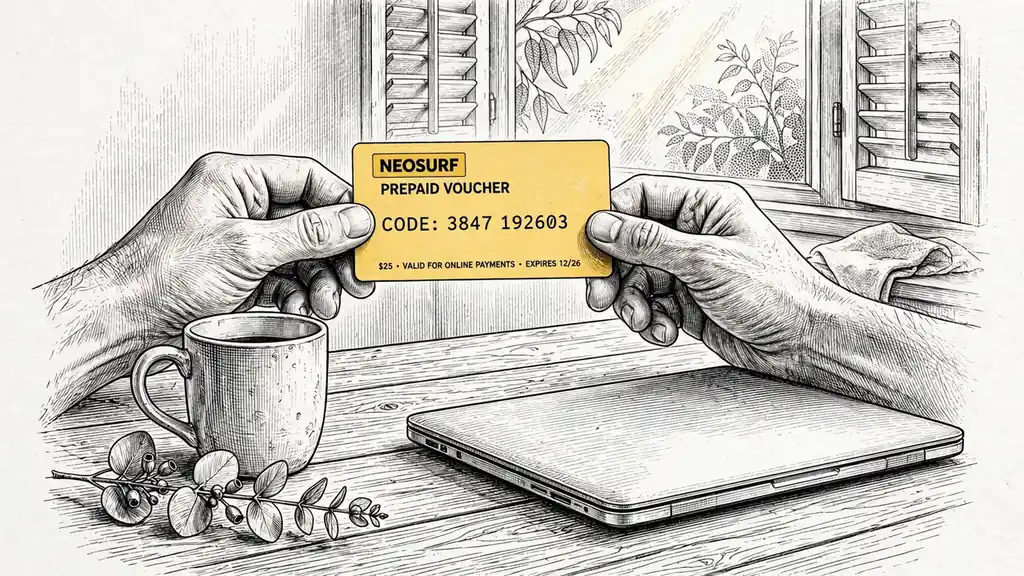
For readers sorting through lists of so-called best anonymous Bitcoin casinos, the promotional label is therefore a weak test. “No deposit” says something about the entry condition. It says nothing by itself about the wagering threshold, the treatment of winnings, or the point at which a withdrawal becomes available.
The source-specific comparison from oceanroadmagazine.com.au is useful precisely because it shows how a crypto offer can be framed as larger than its fiat counterpart. It should not be mistaken for proof that every platform uses those figures or that every crypto bonus is more valuable. The arithmetic is not the whole bargain.
A bonus can be free to claim and expensive to unlock.
Anonymous Bitcoin Casinos: Convenience Without the Banking Layer
Bitcoin sits at the centre of Australia’s privacy-oriented casino conversation for a practical reason: it can move money without passing through an Australian bank. The appeal is less mysterious than the advertising language suggests. A wallet address can replace a card number, and a blockchain transfer can replace a bank-side casino transaction that may never be approved.
That distinction matters because Australian banks do not all treat online casino payments alike. Some block online casino deposits entirely. In that situation, a Bitcoin deposit does not require the bank to authorise a gambling merchant. The banking layer is simply absent from that part of the transaction.
It is a form of financial separation, not a magic cloak.
Banking Layer Using Bitcoin allows for financial separation from traditional Australian banks, as the transaction bypasses the standard banking authorization process for gambling merchants.
Why Bitcoin became the default crypto choice
Bitcoin is the most widely accepted cryptocurrency across crypto casino platforms in Australia. That breadth gives it a practical advantage over less familiar coins: a person holding BTC is more likely to find a platform that accepts the same asset without first converting it.
This helps explain the language surrounding an anonymous Bitcoin casino. The phrase usually combines two different wishes. One is privacy from conventional payment providers. The other is access to a casino account without the friction associated with a bank card. Bitcoin appears to answer both, at least at the deposit stage.
The result is a payment route with fewer institutional intermediaries. Funds move from a wallet to a casino-controlled address rather than from an Australian account through a card network or bank transfer. For gamblers who want faster transactions or larger deposits, that directness is part of the attraction of anonymous crypto casinos.
Yet the currency itself does not decide whether a platform is lawful, trustworthy, or genuinely private. Bitcoin changes the payment rail. It does not turn a prohibited online casino service into an authorised Australian product. Under the Interactive Gambling Act 2001, online casino games offered to Australian customers are prohibited interactive gambling services. No Australian licence exists for casino games, and the law targets the provider rather than the player.
That is the awkward architecture of the market: the customer may not be committing a crime by using an offshore site, while the provider is not thereby granted permission to offer online casino games in Australia. A foreign licence does not become an Australian casino licence merely because the deposit arrives in Bitcoin.
Depositing without a bank card
The deposit experience can feel simpler because Bitcoin avoids the most visible point of refusal. A blocked card payment produces a clear answer from a bank. A wallet transfer does not ask the bank to process a casino merchant at all.
The steps are conceptually spare:
- The casino displays a Bitcoin deposit address.
- The player sends BTC from a wallet.
- The platform credits the account after receiving the transfer.
A profile-focused review reports that cryptocurrency deposits at Australian online casinos are credited within an hour. That is a reported timing, not a universal service standard, and it says nothing about whether a particular operator will later request identity documents or delay a withdrawal.
Bitcoin’s appeal therefore lies in access rather than anonymity in the absolute sense. Blockchain transactions are pseudonymous, not anonymous. They are permanently recorded on a public ledger, and wallet activity can be traceable. The absence of a bank statement does not erase the transaction history; it relocates that history to a different system.
That difference is easy to miss when “anonymous” is used as a sales adjective. An anonymous casino Bitcoin deposit may conceal a customer’s gambling transaction from a bank, but it does not guarantee that the customer’s identity cannot be connected to a wallet. Exchanges, wallet providers, transaction analysis, and the casino’s own records may all create links.
The word does a lot of work. Too much.
Why the banking bypass changes the choice of currency
A person choosing among anonymous BTC casinos is often choosing a payment route before choosing a gambling product. Bitcoin’s wide acceptance reduces the risk of holding an asset that a particular platform refuses. It also avoids the need to connect the deposit to a bank card that may be blocked for online casino use.
That convenience has a cost in complexity. The deposit is no longer governed by familiar banking recovery procedures. A blockchain transfer goes to a wallet address, and the address matters more than the appearance of the casino’s website. The payment is made to the network destination shown at the time of transfer, not to a general promise of privacy.
Widely accepted and serves as the primary bridge for privacy-oriented transactions.
Offers faster processing speeds, though subject to variable network gas fees.
A stablecoin that minimizes exposure to the price volatility of other assets.
A secondary route providing fast and low-cost transaction alternatives.
This is why the phrase anonymous casino no deposit can be misleading when it appears beside Bitcoin-focused offers. A platform may advertise a promotion that requires no initial deposit, but that does not make every later transaction free of conditions, and it does not remove the need to examine the operator’s legal position. Promotional language belongs to the bonus question; Bitcoin belongs to the payment question. They are often placed together because both sound frictionless.
The same applies to claims about anonymous casino free spins, new anonymous casinos, or lists of the best anonymous casino sites and top anonymous casinos. A new interface and a Bitcoin address do not establish a lawful Australian service. Nor does a fast-looking deposit prove that funds can be recovered if a platform becomes unavailable.
For Australian residents, Bitcoin mainly removes one obstacle: the bank’s role in approving or rejecting a casino deposit. It does not remove regulatory limits, public blockchain records, operator risk, or responsibility for using the correct wallet network. Convenience without the banking layer remains convenience, not protection.
Choosing an Anonymous Crypto Casino Without Mistaking Privacy for Legitimacy
The word “anonymous” has acquired a flattering shine in crypto gambling. It suggests a door without a receptionist, a wallet without a name, and a financial life kept safely away from institutions. In practice, privacy is only one property of a platform. It says little about whether the operator is solvent, fair, reachable, or lawful in the market where the player lives.

That distinction matters particularly in Australia. Online casino games—including pokies, roulette, blackjack and live-dealer tables—are prohibited interactive gambling services when offered to Australian customers under the Interactive Gambling Act 2001. No Australian gambling licence exists for casino games, and no domestically licensed real-money online casino operates for Australian players. Australian licensing is available for products such as sports and race wagering, not for online casino games.
An offshore platform is therefore not a legal substitute for a licensed Australian wagering service. A foreign licence may indicate that an authority in another jurisdiction has issued permission under its own rules; it does not authorise the operator to provide casino games to Australians. Nor should a privacy claim be mistaken for approval by ACMA. ACMA publishes a register for Australian-licensed interactive wagering service providers, but that register is not a certificate for an offshore casino.
What deserves scrutiny
The crypto casino Australia market contains a higher concentration of unlicensed or lightly regulated platforms than the fiat casino market. That makes the usual language of “best anonymous casinos” especially unreliable. A polished interface, a large coin menu, and a promise of minimal checks can all coexist with weak dispute procedures and uncertain accountability. Gloss is inexpensive.
- Verify the foreign licence number and jurisdiction.
- Read the specific wagering requirements for bonuses.
- Check for available responsible gambling controls.
- Mistaking a polished interface for regulatory legitimacy.
- Assuming SSL encryption equals an Australian licence.
- Equating pseudonymous blockchain records with absolute anonymity.
A more useful assessment begins with the operator’s actual disclosures:
- Licence information: the platform should state which authority issued its foreign licence and provide a licence number where one exists. Malta and Curaçao are common jurisdictions for offshore operators, but neither licence permits casino services to be offered to Australian residents.
- Terms and withdrawal rules: privacy promises should be read beside the clauses covering account closure, source-of-funds checks, bonus restrictions, and disputed transactions. A site that advertises effortless entry but reserves broad powers to delay or cancel withdrawals is not offering frictionless privacy; it is shifting uncertainty to the player.
- Identity checks: most licensed crypto casino platforms require identity verification before processing significant withdrawals. The process can include a passport, proof of address, and payment-method verification. A platform claiming that identification will never be required may be describing a temporary deposit experience, not a dependable withdrawal policy.
- Complaint channels: an identifiable operator, a working support route, and a named external dispute process matter more than a slogan about anonymity. Crypto transfers do not create a recovery mechanism when an operator refuses to respond.
- Responsible gambling controls: deposit limits, self-exclusion, cooling-off options, and account restrictions should apply regardless of payment method. A platform that treats cryptocurrency as an excuse to remove every safeguard is not demonstrating sophistication. It is demonstrating appetite.
No public Australian register of licensed online casino operators exists because no Australian casino licence exists for this product. That absence cannot be solved by placing an offshore brand on a “top 10 anonymous casinos” list. A list would create the impression of endorsement where the legal position allows none.
Encryption is not legitimacy
Casino operators use SSL encryption to protect cryptocurrency-related financial transactions and sensitive player information. This is an important technical safeguard: it helps protect data moving between the browser and the platform. It does not confirm that the games are fair, that balances will be honoured, or that the business is authorised to serve Australian customers.
The difference resembles the difference between a locked envelope and a trustworthy correspondent. The lock protects the contents in transit; it says nothing about the person holding the envelope.
The same caution applies to wallet handling. Crypto payments do not carry the same consumer protection as banking infrastructure. A card payment may sit within a regulated banking and complaints framework; a cryptocurrency transfer is governed by wallet control and network settlement. If an offshore operator disappears, a foreign licence may offer only limited practical assistance. Privacy can reduce the amount of personal information shared, but it can also reduce the number of institutions capable of helping when something goes wrong.
A practical standard for privacy claims
The stronger question is not whether a site calls itself one of the best anonymous BTC casinos. It is what the site discloses before money is deposited. Privacy should be described precisely:
- what information is requested at registration;
- when identity verification may be triggered;
- which transactions are recorded by the operator;
- how account data is stored and protected;
- whether responsible gambling controls remain available;
- which authority, if any, supervises the operator;
- and what remedy exists if a withdrawal is disputed.
The answers may still leave the platform unsuitable for Australian residents. That is the point. A clear privacy policy cannot convert a prohibited online casino service into a licensed one, and SSL cannot convert an offshore business into an Australian-regulated operator.
Crypto and instant bank transfers are described as being processed within a few hours in one industry overview, but that statement is not a universal market rule. Processing also depends on the operator’s own procedures, and a fast transfer does not establish legitimacy. Speed is a payment characteristic. Regulation is a legal status. They are not the same thing.
Privacy may be valuable. It is not a licence, an insurance policy, or a verdict on fairness. Three different questions.
The 2024 Anonymous-Casino Search, Reconsidered for 2026
Older pages built around the “best anonymous online casinos” often treated privacy as the decisive feature. A short registration form, cryptocurrency deposits and a foreign licence could make an operator look attractively detached from ordinary banking and identity checks. For an Australian audience in 2026, that reading is incomplete. The legal position comes first, and the privacy label comes a distant second.
Australia has no domestically licensed real-money online casino. Under the Interactive Gambling Act 2001, online casino games—including pokies, roulette, blackjack and live-dealer tables—are prohibited interactive gambling services when offered to an Australian customer. Australian licences exist for sports and race wagering, not for casino games. The law targets providers rather than players, but that distinction does not turn an offshore casino into a legal Australian service.
Legal Context For Australians, the legal prohibition on online casino services remains the primary factor regardless of the platform’s privacy marketing.
A historical “list of anonymous casinos 2024” therefore cannot be treated as a current recommendation. Operators change ownership, payment policies, licence status and withdrawal procedures. A page that once described a platform as anonymous may have been relying on a registration experience rather than on any lasting promise of identity-free play. It may also have presented a foreign licence as though it authorised service to Australians. It does not.
Privacy is not the same as anonymity
Cryptocurrency does not erase the trail. Blockchain transactions are pseudonymous, not anonymous: they are permanently recorded on a public and traceable ledger. A wallet address may not display a civil name, but transaction histories can still be followed and connected with information held by exchanges or other services.
That matters when comparing claims about the “best anonymous cryptocurrency casinos”. The phrase suggests a stable product category, while the underlying conditions may be temporary or narrowly defined. A casino might permit an account to be opened without immediate document checks, then request identity verification before processing a significant withdrawal. The absence of an early KYC screen is not proof that verification will never occur.
The Australian crypto casino market also contains a higher concentration of unlicensed or lightly regulated platforms than the fiat casino market. That makes a glossy privacy claim especially weak evidence. Less scrutiny can mean fewer protections, not greater independence. A foreign licence may support the operator’s position in its own jurisdiction, but it does not authorise online casino services for Australians.
What a 2024 page can—and cannot—show
An older review can document what a website claimed or how its registration process appeared at that time. It cannot establish that the same operator remains available, lawful, solvent or willing to honour a withdrawal in 2026. Nor can a historical ranking supply a current endorsement without fresh evidence.

The sensible reframing is plain: anonymity is a payment and registration characteristic, not a legitimacy certificate. Regulatory status, withdrawal verification and the absence of Australian authorisation remain separate questions. Privacy may explain the appeal. It cannot answer the legal one.
Different questions. Different risks.
No-Deposit Crypto Bonuses: What the Small Print Controls
A no-deposit crypto bonus sounds like money detached from the ordinary bargain: no initial payment, no banking trail, no immediate cost. The small print restores the bargain. The balance may appear in an account, yet remain unavailable for withdrawal until the stated wagering requirement has been completed.
That distinction matters more than the label “anonymous”. A casino describing itself as an anonymous crypto casino may still attach conditions to promotional funds. Privacy language does not turn bonus credit into cash, and a crypto wallet does not remove contractual restrictions. A locked balance is still locked, whatever currency symbol appears beside it.
The deposit-free promise
A no-deposit offer can be presented as separate from a deposit promotion, but both depend on their terms. The relevant questions are whether the bonus itself must be wagered, whether winnings derived from it are subject to the same restriction, and what event releases the withdrawal function. If the rules do not state these points clearly, the attractive headline is doing more work than the offer.
The same caution applies to an anonymous casino no-deposit bonus advertised alongside a crypto welcome package. A promotion may be available only after account registration, only for a specified currency, or only under conditions set out in the bonus policy. An absence of an initial deposit does not mean an absence of eligibility rules.
No-Deposit Process
The player creates an account, often with minimal initial data.
The player must meet all promotional terms and specific game restrictions.
The player completes the required turnover using the promotional credit.
The player requests funds, at which point the casino may trigger identity verification (KYC).
Wagering before withdrawal
The verified market description is blunt: crypto bonuses may carry the same wagering multiplier as fiat bonuses, or a different one, and withdrawals remain locked until the wagering threshold is met. The wording matters because the threshold may govern more than the promotional amount. It can determine when funds credited to the balance become withdrawable at all.
An illustration reported by oceanroadmagazine.com.au contrasts a standard AUD offer of 100% up to A$750 with a crypto promotion of 200% up to $3,000 USDT at the same platform. Those figures describe that reported comparison, not a market-wide promise. They also show why headline percentages are poor evidence of value. A larger crypto figure can carry a separate wagering condition, and the condition controls access to the money.
The sensible reading is therefore procedural: identify the qualifying action, the amount subject to wagering, the threshold, and the precise point at which withdrawal is unlocked. Until that point, the balance is promotional credit, not available funds.
Small print wins.
How Fast Can an Anonymous Bitcoin Withdrawal Arrive?
A Bitcoin withdrawal has two clocks, and confusing them is how “instant” acquires its familiar advertising shine.
The first clock belongs to the casino. A withdrawal request may sit in an internal approval queue before any Bitcoin moves. The time varies between platforms and depends on whether the request passes through a streamlined process or manual review. A platform with streamlined approval can, according to a report by oceanroadmagazine.com.au, deliver funds to a wallet within thirty minutes of the request. The same source says that manual review can take several hours.
That distinction matters more than the word anonymous. A site may accept a withdrawal request without asking for visible banking details, yet still pause the payment for account checks. Privacy language does not remove the operator’s own procedures. Nor does a fast interface prove that the business is trustworthy. Speed is a service characteristic, not a licence.
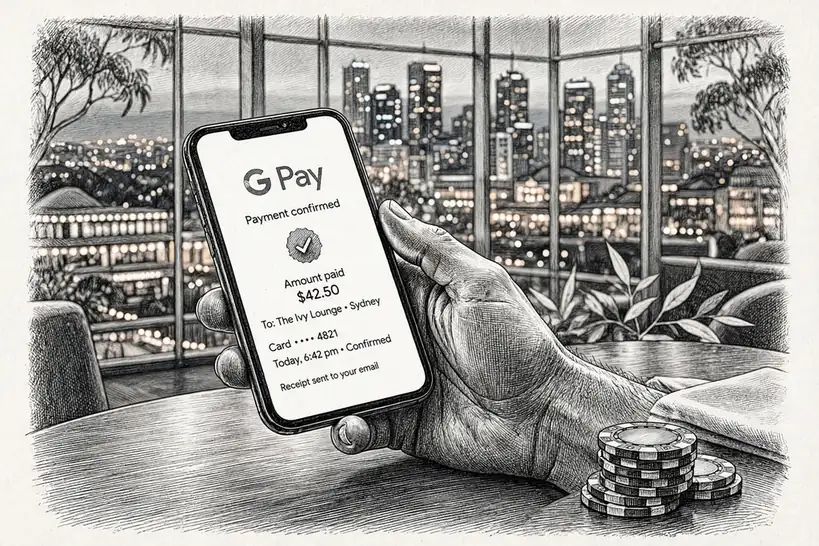
The second clock starts only after approval. Once released, the crypto transfer settles on the blockchain within minutes, regardless of the time or day. Network conditions can still affect confirmation, but the casino’s decision comes first. Until that decision is made, there is no blockchain transaction to wait for.
Traditional banking follows a different rhythm. Bank transfers are the slowest consistent option, with processing windows measured in business days. PayID withdrawals can be competitive with crypto, but the same internal approval queue still controls when processing begins, according to oceanroadmagazine.com.au.
So an “instant” Bitcoin withdrawal is not a single event. It is approval, then settlement. Two clocks. One advertisement.
Anonymous Cryptocurrency Casinos and the Stablecoin Question
Currency choice changes the meaning of privacy in an anonymous cryptocurrency casino. A blockchain address can avoid handing card details to a merchant, but it does not remove exchange-rate risk, network charges, or the need to use the correct wallet route. The payment coin is part of the decision, not decorative branding.
Ethereum: speed with a variable toll
Ethereum processes transactions faster than Bitcoin and is accepted by most platforms that accept BTC. That makes it a practical alternative where a casino supports both currencies. The trade-off is the network fee. Ethereum gas fees vary with network activity and, as reported by oceanroadmagazine.com.au, can become higher during busy periods.
This creates a cost that sits outside the gambling balance. The amount arriving at the casino, or leaving it, may be affected by the fee required to move it. A faster network is not automatically a cheaper one. Blockchain convenience has its own meter running in the background.
Is Bitcoin truly anonymous?
No, Bitcoin transactions are pseudonymous. While they don’t use your name, they are recorded permanently on a public, traceable blockchain ledger.
Can I use a bank card for deposits?
Many players use crypto specifically to avoid bank cards, as some Australian banks may block transactions to online casino merchants.
Why is USDT different from Bitcoin?
USDT is a stablecoin pegged to the US dollar, meaning it avoids the high price volatility seen with Bitcoin or Ethereum.
USDT: less price exposure
USDT, or Tether, is a stablecoin valued at one US dollar. Depositing and withdrawing in USDT removes the price volatility associated with holding Bitcoin or Ethereum during play. That can make the balance easier to understand in Australian-dollar terms, although conversion into AUD still involves an exchange rate.
USDT retains the access and speed advantages associated with crypto payments, but network and platform support still matter. A wallet must send USDT through the network specified by the receiving service. Confusing networks can turn a seemingly simple transfer into a recovery problem.
Litecoin: a secondary route
Litecoin is presented as a fast, low-cost payment option and is accepted at many platforms as a secondary choice. It may suit users who want crypto functionality without choosing Bitcoin, while remaining less universal than BTC.
The sensible comparison is therefore not “anonymous” versus “identified”. It is exposure versus cost: Ethereum may move faster but carry variable gas fees; USDT reduces price movement; Litecoin offers another payment route. None of these features makes an offshore casino legal for Australian customers or supplies banking-style consumer protection.
What Makes a Bitcoin Casino the Better Anonymous Option?
Bitcoin is the benchmark for privacy-oriented crypto payments largely because it is accepted more widely across crypto casino platforms in Australia than other cryptocurrencies. That reach matters: a wallet can be used without placing a card transaction or bank transfer at the centre of the deposit. Yet “anonymous” remains an imperfect description. Bitcoin addresses are pseudonymous, while transactions are permanently recorded on a public ledger. Privacy is therefore reduced visibility, not disappearance.
A platform marketed as the best anonymous Bitcoin casino still has to be judged on the payment process rather than the slogan. Does it accept Bitcoin directly? Does it explain when a deposit is credited? Are withdrawal conditions and identity checks stated before funds are sent? A foreign licence, even where one exists, does not authorise online casino games for Australian customers. Australia has no domestically licensed real-money online casino, and the Interactive Gambling Act 2001 prohibits online casino services such as slots, roulette and blackjack when offered to Australians. The provider is targeted by the law, not the individual player, but that distinction does not turn an offshore platform into a local legal option.

Bitcoin also carries a cost that privacy language tends to tuck behind the curtain. Its value against the Australian dollar can change while funds sit in an account, independently of gambling results. The balance may therefore lose purchasing power before any game is played. Network conditions add another uncertainty. A report from oceanroadmagazine.com.au says Bitcoin transactions can take longer to confirm when the network is congested. Acceptance, then, is not the same as immediacy.
Bitcoin’s advantage is broad access and separation from ordinary banking. Its limits are public traceability, price exposure and confirmation risk. No magic cloak.
Bitcoin Casino Payments: The Wallet Risks Privacy Claims Leave Out
A Bitcoin casino may appear anonymous because a wallet address can replace a bank account name. That appearance is limited. Blockchain transactions are pseudonymous, not anonymous: they remain permanently recorded on a public, traceable ledger. A payment can therefore leave a durable trail even when no identity is printed beside it.
The first practical danger is irreversibility. Sending Bitcoin to the wrong wallet address cannot be undone by a bank-style cancellation. The same problem applies when funds are sent to a casino that becomes unavailable. Recovery may be extremely difficult, and the responsibility does not shift to the blockchain, the wallet provider, or the operator’s support desk.
Wallet security is another part of the bargain that privacy slogans tend to omit. Lost private keys can make funds inaccessible. A compromised wallet can expose funds before anyone notices. Security is therefore not a decorative technical detail; it is the condition that makes the payment usable at all. Anonymous access does not create consumer protection equal to banking infrastructure.
Network confusion adds a particularly unglamorous trap. Bitcoin and Bitcoin Cash are different networks. A transfer must use the currency and address format specified for the payment. Bitcoin Cash (BCH) should not be sent as Bitcoin (BTC), or the reverse. The names are similar; the consequences are not.
Litecoin is sometimes accepted as a secondary payment option and offers fast, cheap transactions, but changing currency does not remove wallet responsibility or the public record. Privacy, in other words, is not a cloak. It is a thinner curtain than advertising suggests.
Can Australians use Bitcoin Cash casinos?
Australians may access offshore crypto casino sites, but Bitcoin Cash is not identified among the cryptocurrencies covered here. Online casino games remain prohibited interactive gambling services when offered to Australian customers, and no Australian licence authorises them.
Do Neosurf deposits qualify for casino bonuses?
Neosurf deposits are not covered by the available information about casino bonuses.
What innovations are being tested in responsible gambling tools?
The available information does not describe innovations being tested in responsible gambling tools.
What are the ethical obligations of operators regarding player safety?
The available information does not set out specific ethical obligations for operators regarding player safety.
Does Neosurf charge fees?
The available information does not state whether Neosurf charges fees.
Can I remove myself from BetStop?
The available information does not explain whether or how a person can remove themselves from BetStop.
How is ACMA using data analytics?
The available information does not describe how ACMA uses data analytics.
How long are self-exclusion periods?
The available information does not specify the length of self-exclusion periods.
Created by the ”Casino Info Au” editorial team.